

Child Can’t Read? Dyslexia Signs & Learning Disabilities

Manasi V
Founder, Psychologist, Special Educator
My Child Can't Read — Could It Be Dyslexia
Or Another Learning Disability?
Child Learning Problems with Reading & Writing: A Complete Guide
She was nine years old, intelligent and curious, and she hated books. Her mother told me she had been read to every night since birth. She loved stories — when they were told to her. But the moment a page of text was in front of her, something changed. She would shut down, cry, or make excuses. Her teachers called her 'bright but lazy.' Three months later, after a comprehensive assessment, we had a different word: dyslexic.
Child learning problems involving reading, writing, and mathematics are among the most frequently undiagnosed conditions in Indian schools. Parents often wait years before seeking help because the signs are misread as effort issues, attitude problems, or a simple need for more practice. This blog is a clinical map — every major learning disability, what to look for, what it is called, whom to see, and what tests are accepted in India.
"Child learning problems are not intelligence problems. Some of the most innovative minds in history — Einstein, Edison, da Vinci — showed profiles consistent with what we now call learning disabilities."
A Complete Guide to Learning Disabilities: Technical Names, Signs & Specialists
Dyslexia (Specific Learning Disorder with Impairment in Reading)
Technical DSM-5 Name: Specific Learning Disorder (SLD) with Impairment in Reading
ICD-11 Code: 6A03.0
What to look for:
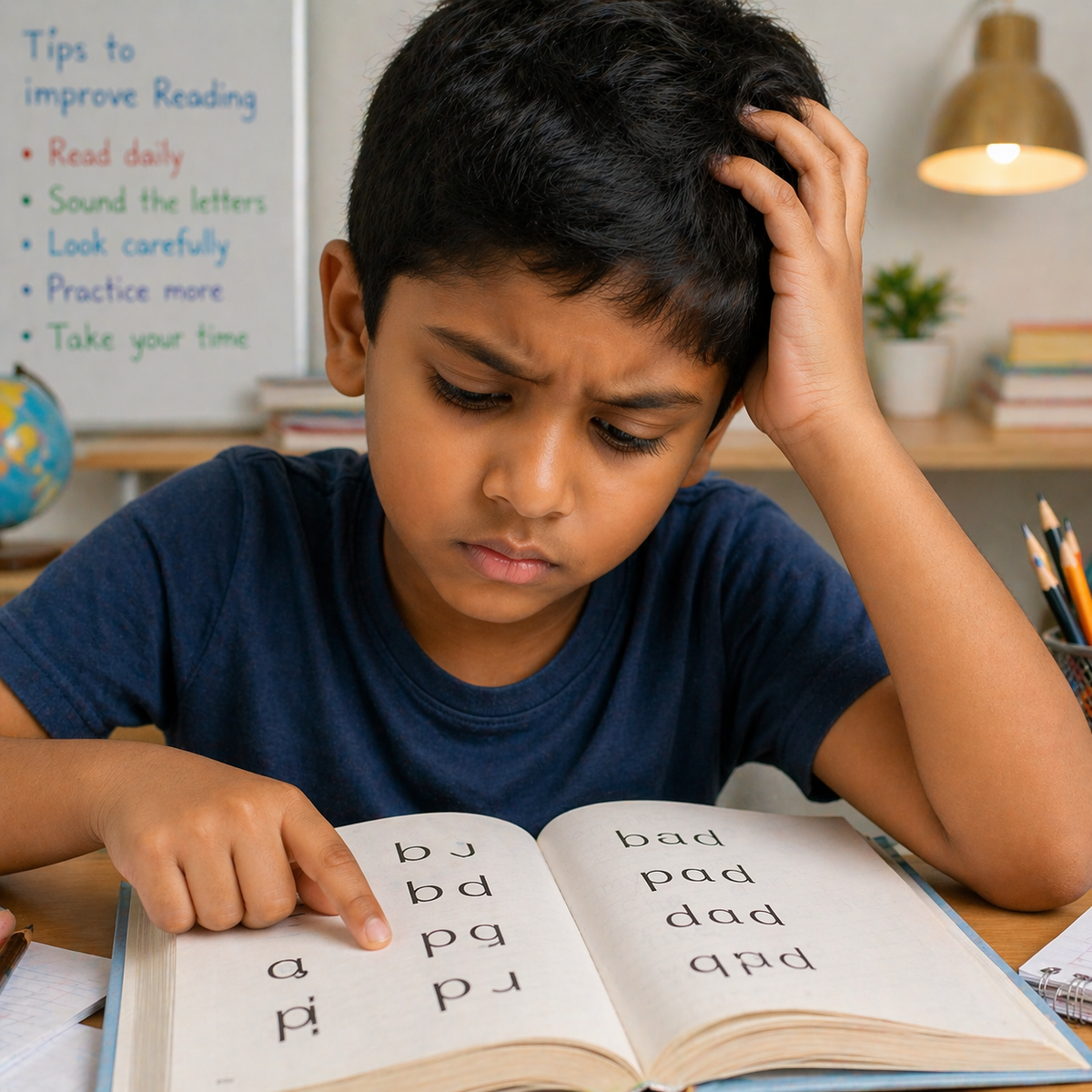
Difficulty decoding words accurately and fluently, poor phonological awareness (cannot identify or manipulate sounds in words), letter and word reversals (b/d, was/saw) after age 7, slow and laboured reading, difficulty with spelling despite practice, and poor reading comprehension that stems from decoding failure. Many children with dyslexia have strong verbal reasoning and listening comprehension — the gap between oral and written performance is a key diagnostic marker.
Prevalence: 5–17% of the population; the most common child learning problem globally (Shaywitz, 2020)
Whom to consult: Clinical Psychologist → Special Educator (Orton-Gillingham trained) → SLP
Accepted tests in India: WISC-V / MISIC (cognitive), WRAT-5 (academic achievement), CTOPP-2 (phonological processing), Neale Analysis of Reading Ability, NIMHANS Battery, RCI-recognised psychoeducational assessment report required for board accommodation
2. Dysgraphia (Specific Learning Disorder with Impairment in Written Expression)
Technical DSM-5 Name: Specific Learning Disorder (SLD) with Impairment in Written Expression
ICD-11 Code: 6A03.2
What to look for:
Illegible handwriting despite effort, inconsistent letter formation and sizing, poor spelling, significant difficulty organising thoughts on paper even when verbally articulate, physical pain or fatigue during writing, extremely slow written output, avoidance of writing tasks. These children often perform far better on oral vs. written tests — a diagnostic signal parents and teachers frequently miss.
Whom to consult: Clinical Psychologist + Occupational Therapist (motor component) + Special Educator
Accepted tests in India: WISC-V Processing Speed Index, Beery VMI (Visual-Motor Integration), WRAT-5 spelling and written expression subtest, OT handwriting assessment (Handwriting Without Tears protocol)
3. Dyscalculia (Specific Learning Disorder with Impairment in Mathematics)
Technical DSM-5 Name: Specific Learning Disorder (SLD) with Impairment in Mathematics
ICD-11 Code: 6A03.1
What to look for:
Difficulty understanding number sense and quantity, cannot recall basic arithmetic facts despite repeated practice, poor understanding of mathematical concepts (not just procedures), confuses mathematical symbols, difficulty telling time or handling money, and poor spatial reasoning affecting geometry. Often co-occurs with dyslexia (approximately 40% overlap).
Whom to consult: Clinical Psychologist + Special Educator with mathematics remediation training
Accepted tests in India: WISC-V (Working Memory, Processing Speed Indices), WRAT-5 Mathematics subtest, KeyMath-3, Dyscalculia Screener (Butterworth)
4. Developmental Language Disorder (DLD)
Technical Name: Developmental Language Disorder (DLD)
ICD-11 Code: 6A01.1
What to look for:
Persistent difficulties with understanding and using language — spoken and/or written — not explained by hearing loss, ASD, or intellectual disability. Child struggles to follow complex instructions, has a limited vocabulary, makes grammatical errors atypical for their age, and struggles to tell coherent stories. DLD affects approximately 7.5% of children and is one of the most underdiagnosed child learning problems (Bishop et al., 2017).
Whom to consult: Speech-Language Pathologist (primary) + Clinical Psychologist
Accepted tests in India: CELF-5, Preschool Language Scales (PLS-5), TOLD-P:4, Clinical Evaluation of Language Fundamentals
5. Non-Verbal Learning Disability (NVLD)
Technical Name: Non-Verbal Learning Disability (NVLD) — not yet in DSM-5 as a standalone; recognised in neuropsychological literature
What to look for:
Strong rote verbal skills (reads words well, memorises facts) but profound difficulty with visual-spatial tasks, mathematics, reading comprehension (deeper meaning), social perception, and adapting to novel situations. Often misidentified because the child appears verbally capable. These children struggle enormously with the social and inferential demands of school from middle primary onwards.
Whom to consult: Clinical Neuropsychologist + Special Educator + School Counsellor
Accepted tests in India: WISC-V (VCI vs. VSI discrepancy analysis), WRAT-5, NEPSY-II (Neuropsychological assessment), social perception measures

6. Attention-Deficit/Hyperactivity Disorder (ADHD) — Impact on Reading & Learning
Technical DSM-5 Name: Attention-Deficit/Hyperactivity Disorder
ICD-11 Code: 6A05
What to look for:
ADHD co-occurs with dyslexia in approximately 25–40% of cases. A child with ADHD will show poor sustained attention for reading, impulsive guessing rather than decoding, difficulty tracking across lines, and losing place while reading. Critically, ADHD impacts academic performance across all subjects — not just reading. Diagnosis of both conditions, when present, is essential for appropriate intervention planning.
Whom to consult: Clinical Psychologist + Developmental Paediatrician or Child Psychiatrist
Accepted tests in India: Conners-3 (parent and teacher ratings), WISC-V, Continuous Performance Test (CPT), BRIEF-2 (executive function)
7. Intellectual Disability (ID) with Academic Impact
Technical DSM-5 Name: Intellectual Disability (Intellectual Developmental Disorder)
ICD-11 Code: 6A00
What to look for:
Significant limitations in both intellectual functioning (IQ below 70) and adaptive behaviour (communication, self-care, social skills) originating before age 18. Child learning problems are pervasive rather than domain-specific. Learning in a mainstream curriculum without significant modification is not appropriate without support. ID ranges from mild (IQ 55–70) to moderate (40–55) to severe/profound (below 40).
Whom to consult: Clinical Psychologist + Developmental Paediatrician + Special Educator
Accepted tests in India: MISIC (Malin's Intelligence Scale for Indian Children), WISC-V, Binet-Kamat Test, Vineland Adaptive Behaviour Scales-3, NIMHANS Neuropsychological Battery
What Tests Are Accepted in India for Board Accommodations?
The Central Board of Secondary Education (CBSE), ICSE, and most State Boards accept psychoeducational reports for exam accommodations (extra time, reader, scribe, compensatory marks) provided:
1. The assessing psychologist is registered with the Rehabilitation Council of India (RCI)
2. The report includes a formal diagnosis (DSM-5 or ICD-11), cognitive assessment scores (WISC-V / MISIC), and specific recommendations
3. The assessment was conducted within 3 years of the accommodation application (some boards specify 2 years)
4. The report is on official letterhead with the psychologist's RCI registration number, signature, and seal
Under the Rights of Persons with Disabilities (RPwD) Act, 2016, Specific Learning Disabilities are included in the list of disabilities. This means children with a formal diagnosis have legal entitlements to reasonable accommodations in education — a right that many Indian families are not yet aware of.
"In India, a child with a diagnosed specific learning disability has a legal right to accommodations in school and Board exams under the RPwD Act, 2016. Claiming this right begins with a proper assessment."
Frequently Asked Questions
Q: How do I know if my child has dyslexia or is just a slow reader?
A: A slow reader who, given enough time, reads accurately and comprehends well may simply be developing. A child with dyslexia shows specific patterns: poor phonological awareness, inaccurate reading errors (not just slow), poor spelling despite instruction, and a family history of reading difficulties. Only a formal assessment can reliably distinguish between the two.
Q: Can dyslexia be cured?
A: Dyslexia is not cured — it is a lifelong neurological profile. However, with evidence-based intervention (structured literacy, Orton-Gillingham approach), most children with dyslexia become functional, independent readers. Many go on to higher education and successful careers. The goal is not to eliminate dyslexia but to build skills and appropriate accommodations.
Q: My child reads well but cannot do maths. Could that be a learning disability?
A: Yes. Dyscalculia is a specific learning disorder that affects mathematical processing independently of reading ability. It is significantly underdiagnosed compared to dyslexia. A psychoeducational assessment will identify whether the mathematical difficulties stem from dyscalculia, working memory deficits, attention problems, or instructional gaps.
Q: Which report is valid for CBSE accommodations?
A: A report from an RCI-registered clinical psychologist or rehabilitation psychologist, containing a DSM-5 or ICD-11 diagnosis, standardised test scores, and specific recommendations. The report must typically be no older than 2–3 years. Some schools also require a countersignature from a developmental paediatrician.
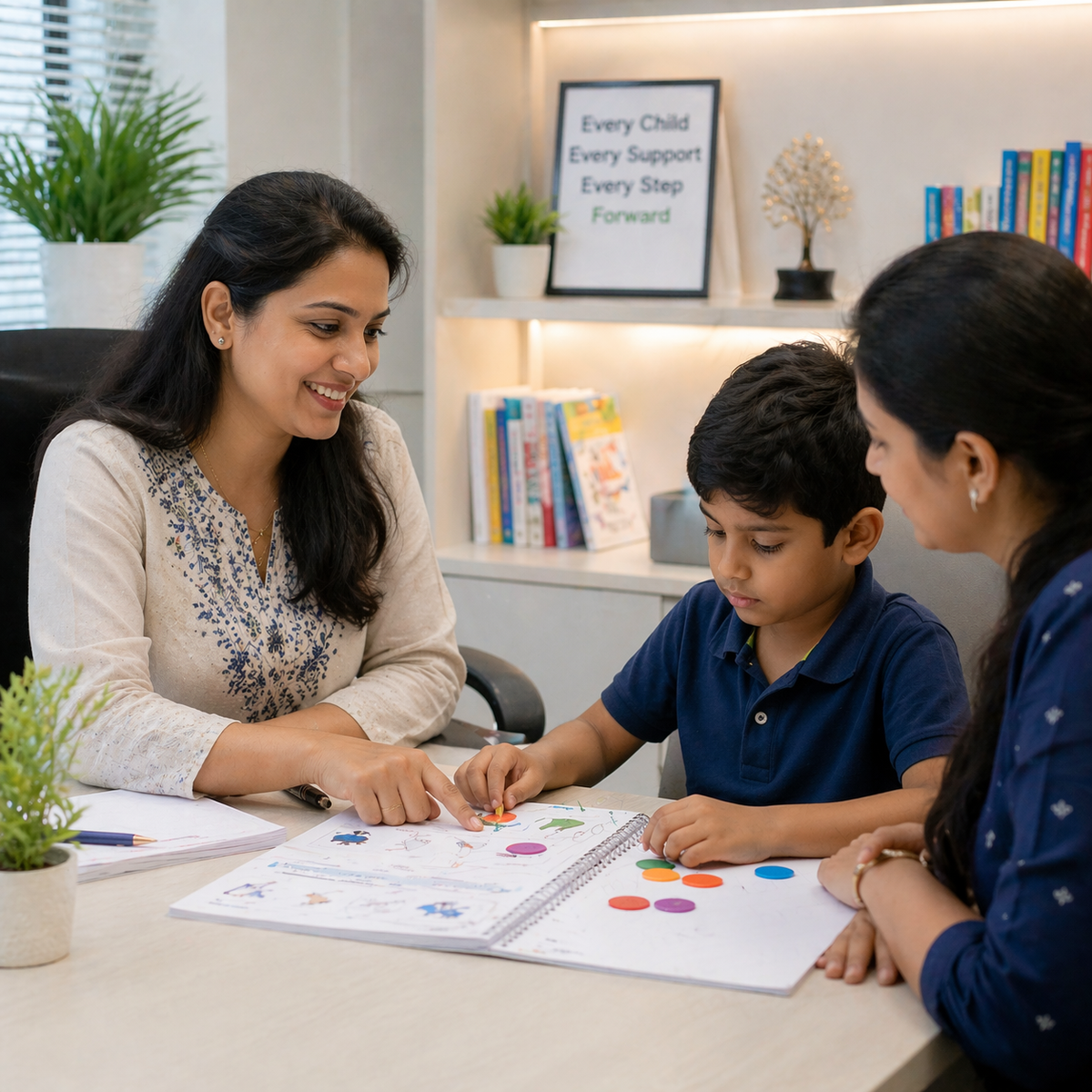
👉 Book an Assessment with MANAS Learning
Early identification changes outcomes. Our team of experienced clinical psychologists offers comprehensive child assessments for learning, attention, speech, and behavioural concerns. Don't wait — the right support at the right time makes all the difference.
References
Shaywitz, S.E., & Shaywitz, B.A. (2020). Dyslexia. New England Journal of Medicine, 338(5), 307–312.
Bishop, D.V.M., et al. (2017). Phase 2 of CATALISE. PLOS ONE, 12(7), e0181044.
American Psychiatric Association. (2013). DSM-5. APA.
Rehabilitation Council of India. (2016). Guidelines for Assessment of Learning Disabilities. RCI, New Delhi.
Ministry of Law & Justice, India. (2016). The Rights of Persons with Disabilities Act, 2016.
This blog is for educational awareness only. It does not constitute a clinical diagnosis or professional advice. Please consult a qualified mental health or medical professional for individual concerns.
Topics
About the Author

Manasi V
Founder, Psychologist, Special Educator