


Why Is My Child Sensitive to Sounds & Textures?

Manasi Valluri
Clinical Psychologist | 10+ Years | 3,500+ Child Assessments
Why Is My Child So Sensitive to Sounds and Textures?
By Manasi Valluri | Founder, MANAS Learning | Educational Psychologist
The T-Shirt That Ruins the Morning
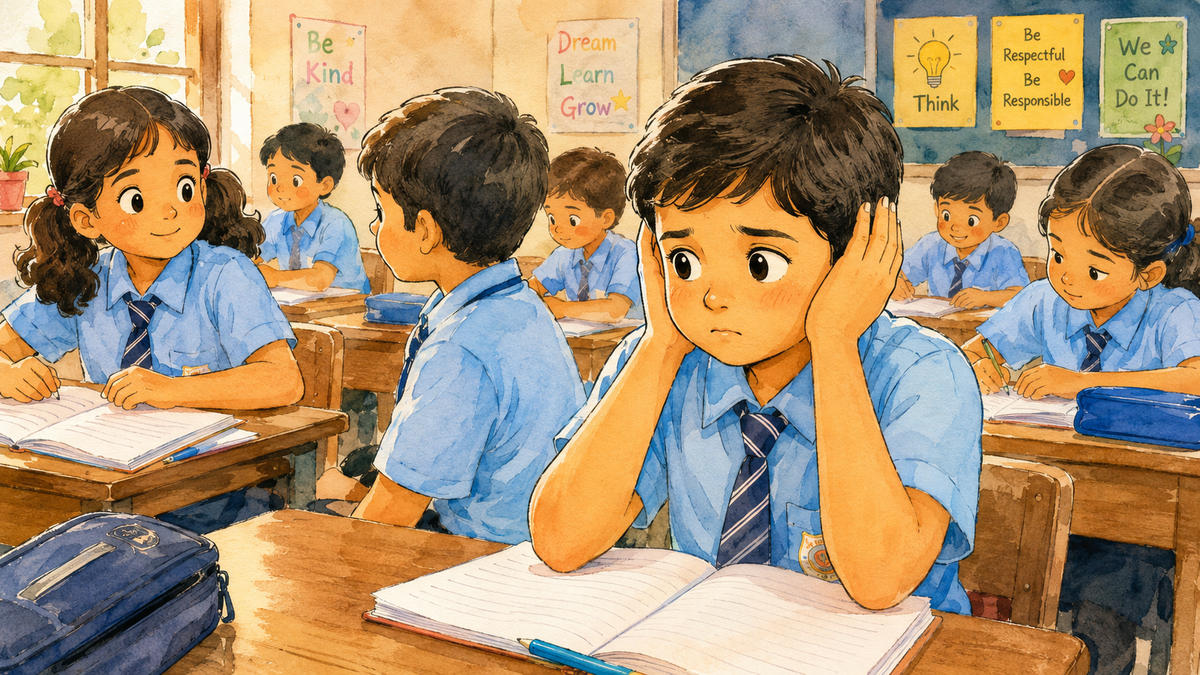
It's 7:30 AM. School starts in an hour. Your child is dressed and ready — except for the shirt. The seams feel wrong. The collar is too tight. The fabric is 'scratchy'. You have tried three different tops and now they are in tears, you are running late, and the morning has dissolved into chaos.
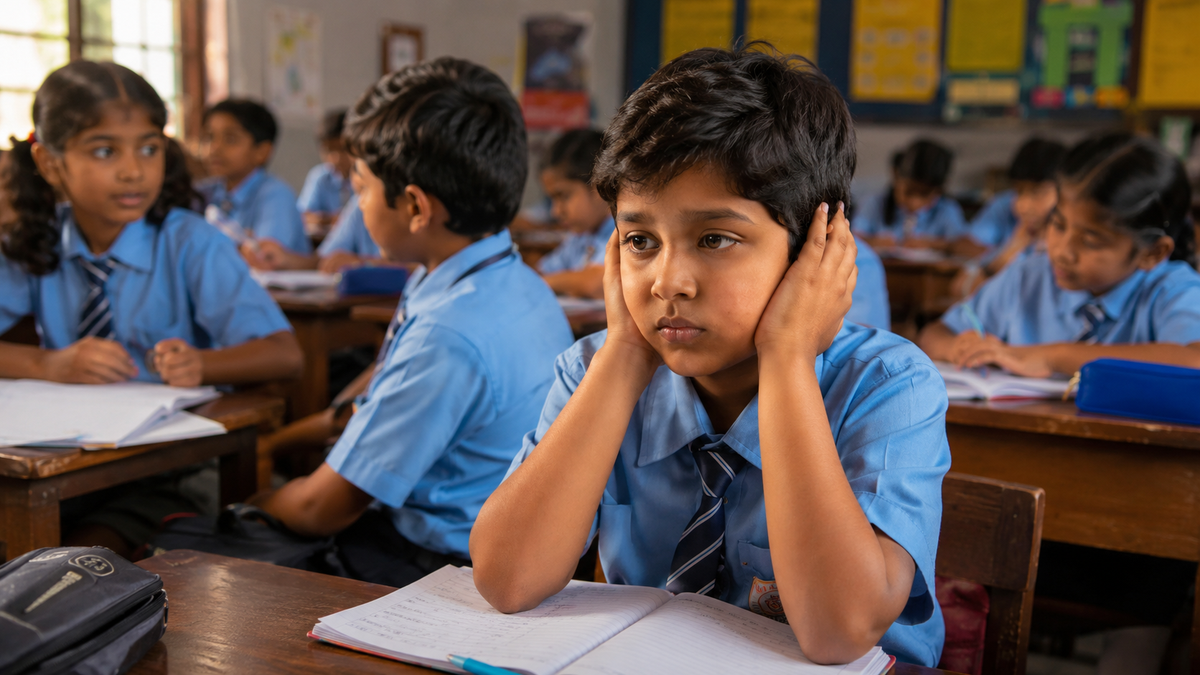
Or perhaps it is the school canteen — the smell of food, the scraping of chairs, the overlapping voices — and your child comes home exhausted and dysregulated, unable to explain why they find the whole place unbearable. Or maybe it is the birthday party where the balloons might pop, the music is too loud, and your child spends the whole event pressed against the wall, begging to go home.
If any of this resonates, your child may be experiencing what psychologists call Sensory Processing Disorder or sensory processing differences — and it is far more common than most parents realise.
What Is Sensory Processing?
Every second, our nervous system is flooded with sensory information — sights, sounds, textures, smells, tastes, and even the internal sense of where our body is in space. In most people, the brain filters this information automatically, prioritising what is important and dampening what is not. But in some children, this filtering mechanism is miscalibrated. Their brain either amplifies sensory signals far beyond their actual intensity (hypersensitivity) or underregisters them (hyposensitivity).
This is not a choice. This is not drama. This is a genuine neurological difference in how the brain processes the world. And it can make ordinary daily life genuinely exhausting.
The Eight Senses — Yes, Eight
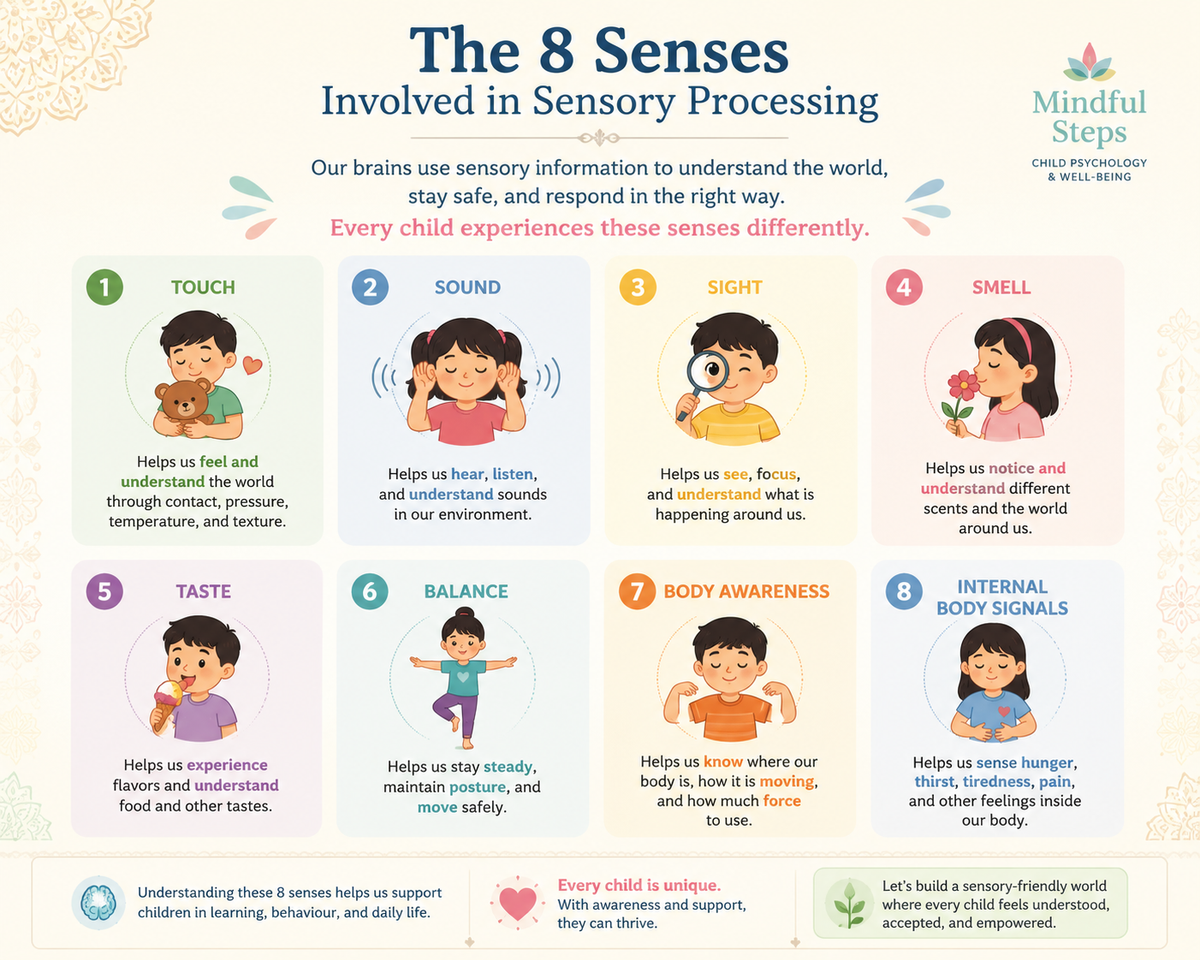
Most of us were taught about the five senses in school. But from a neurological standpoint, there are at least eight senses that children process — and any of them can be dysregulated:
- Tactile (touch): Sensitivity to fabric, labels, temperature, or physical contact.
- Auditory (sound): Over-reaction to loud, sudden, or layered sounds — fire alarms, school bells, crowded rooms.
- Visual: Sensitivity to bright lights, flickering screens, or visually busy environments.
- Olfactory (smell): Strong reactions to food smells, perfumes, or classroom odours.
- Gustatory (taste): Extreme food selectivity — not pickiness, but genuine sensory aversion.
- Vestibular (balance/movement): Discomfort with swings, escalators, or uneven surfaces — or a craving for spinning and rocking.
- Proprioceptive (body awareness): Poor sense of how much pressure to apply, clumsiness, or craving deep pressure and heavy input.
- Interoception (internal body signals): Difficulty recognising hunger, thirst, or the need to use the bathroom.
Is It Just Fussiness — Or Something More?
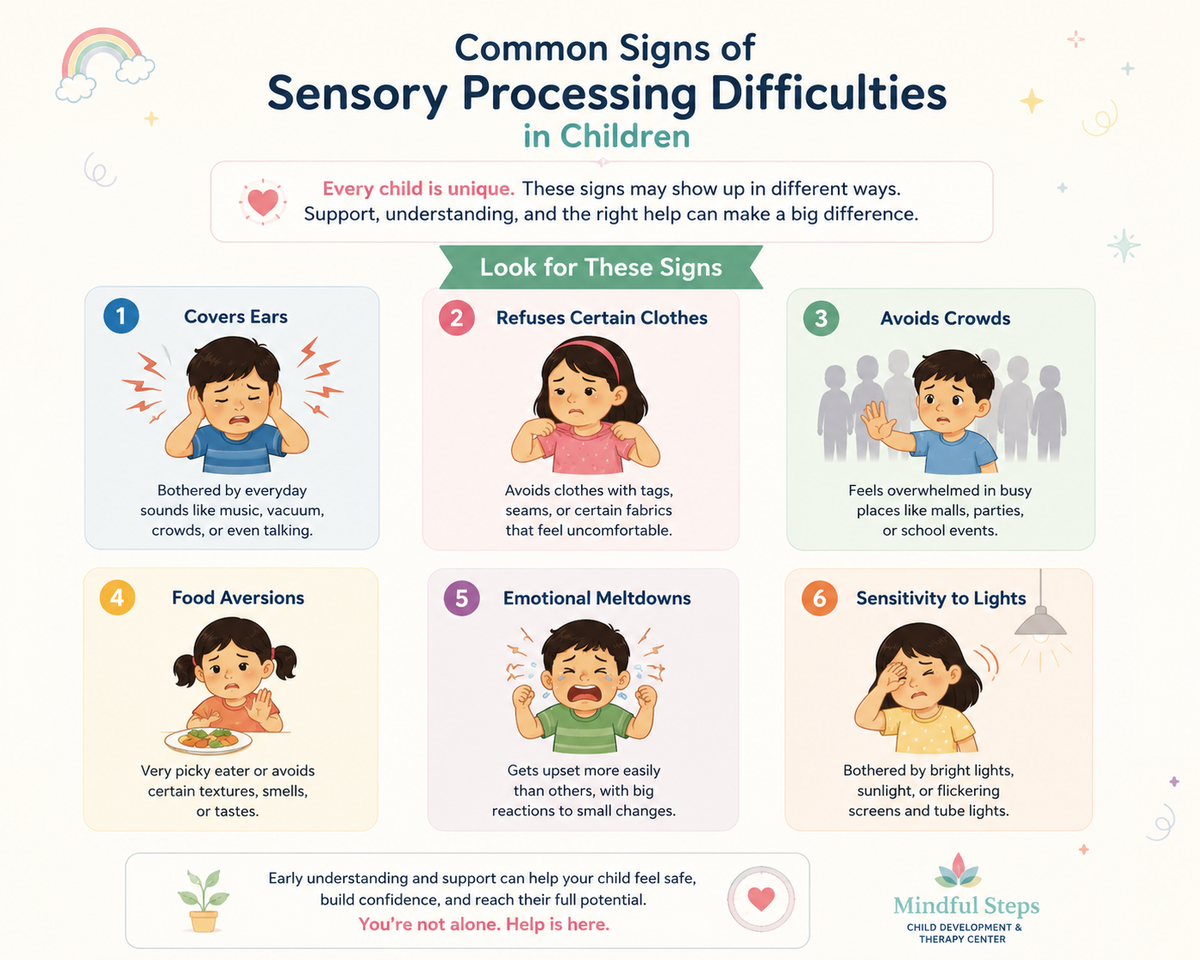
This is the question parents ask me most often. Here is a simple framework I use at MANAS Learning: if your child's sensory reactions are disrupting daily life — getting dressed, eating meals, attending school, making friends, sleeping — then it is worth a professional evaluation. Fussiness is occasional and context-dependent. Sensory processing differences are consistent, intense, and cross multiple environments.
Other signs that warrant attention include meltdowns that seem disproportionate to the trigger, extreme food selectivity, frequent complaints about clothing, avoidance of physical contact, and significant distress in crowded or noisy environments.
How MANAS Learning Approaches Sensory Differences
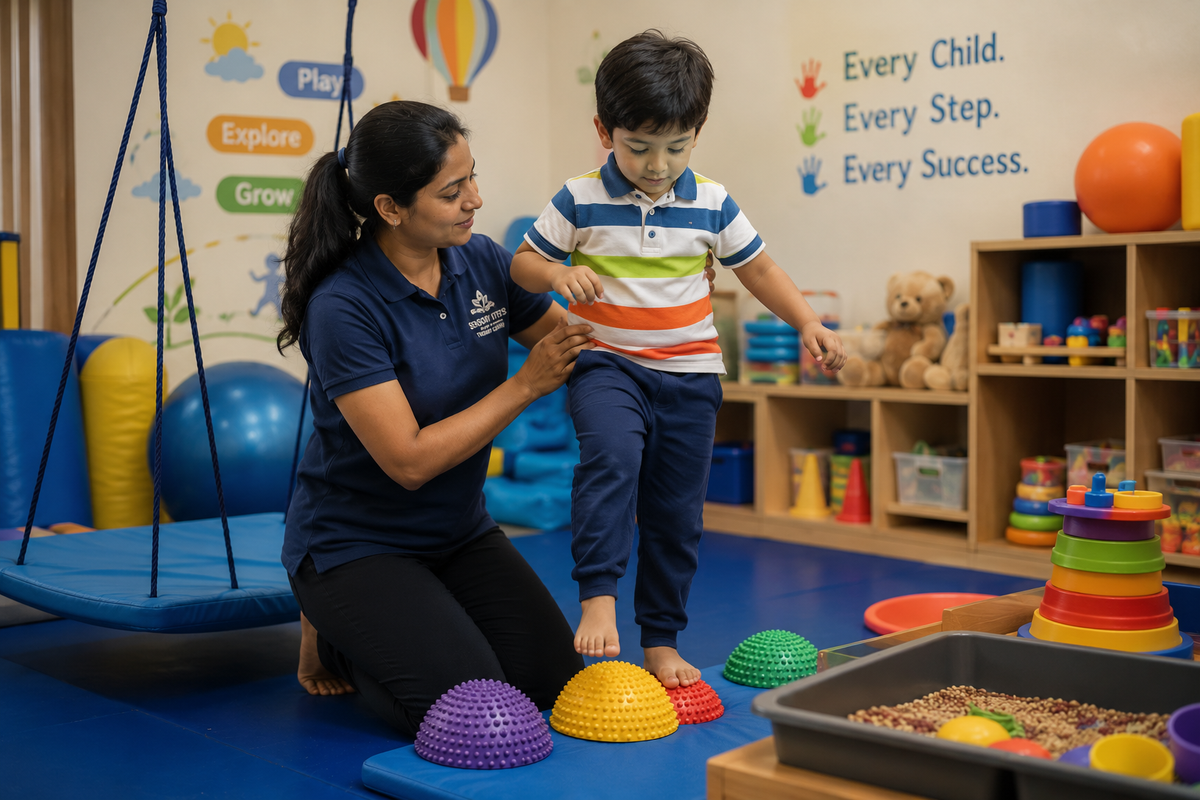
At MANAS Learning, sensory processing challenges are assessed and addressed as part of a holistic understanding of your child. Our occupational therapists use sensory integration therapy — a research-backed approach that gradually challenges and reorganises the nervous system's response to sensory input. We also work closely with parents, because the home environment is where most sensory regulation happens day-to-day.
Practical strategies might include sensory diets — personalised daily schedules of sensory activities designed to keep your child's nervous system regulated — as well as environmental modifications, clothing strategies, and communication tools to help your child articulate what they are experiencing.
You Are Not Raising a Difficult Child
You are raising a child whose nervous system experiences the world differently — and that is not a flaw. At MANAS Learning, we believe that every child's unique sensory profile is part of who they are. Our goal is never to eliminate sensitivity, but to give children the tools to navigate the world with greater ease and confidence.
Because when a child feels understood — truly, neurologically understood — they stop fighting the world. And they start discovering what they are capable of.
📞 Book a free consultation at manaslearning.com — because every child deserves to be understood.