

Why Is My Child a Slow Reader? Signs, Causes and Reading Support for Children

Manasi Valluri
By Manasi Valluri | Founder, MANAS Learning | Educational Psychologist
Why Does My Child Read Slowly?
By Manasi Valluri | Founder, MANAS Learning | Educational Psychologist
When Reading Feels Like Climbing a Mountain

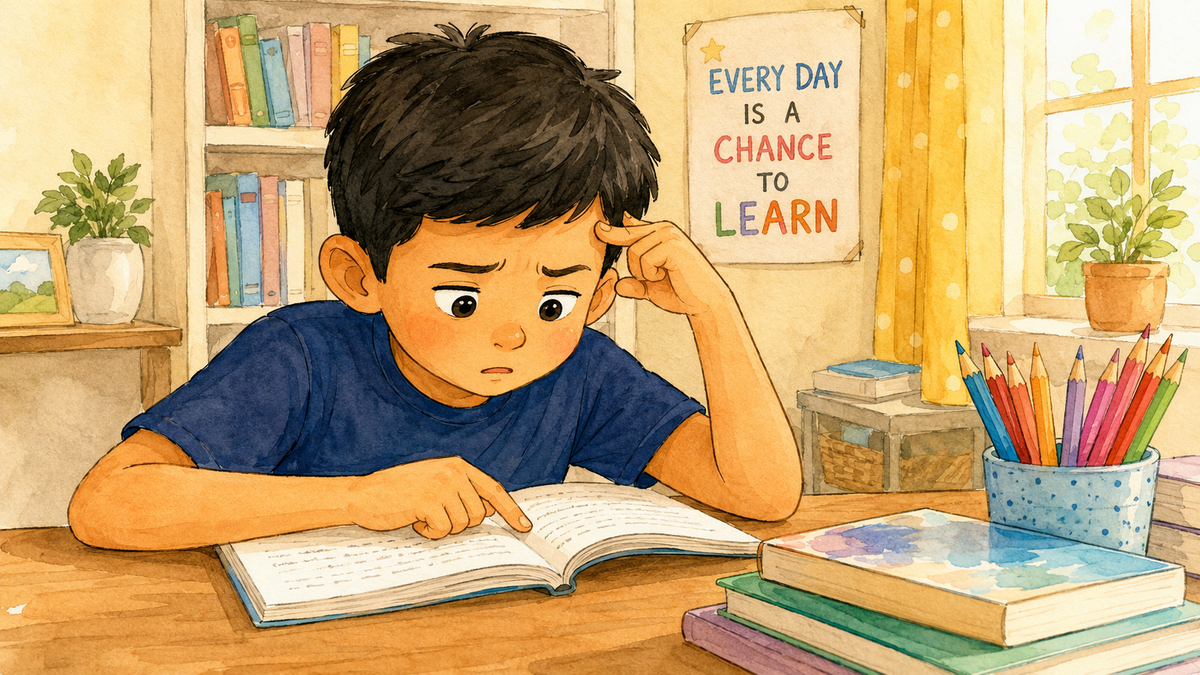
Your child sits with a book open in front of them. Each word is a small battle. They sound out letters haltingly, lose their place in the sentence, and re-read the same line three times. By the time they finish a paragraph, they cannot recall what it was about. Their classmates are reading whole chapters effortlessly. Your child is still on page two.
The frustration — yours and theirs is palpable. You wonder if they are not trying hard enough, not paying attention, or simply not 'a reader'. But at MANAS Learning, we see dozens of children like this every month. And in almost every case, slow reading is not a reflection of intelligence or effort. It is a signal that something specific needs attention.
The Reading Brain: What Actually Happens
Reading is the most complex skill the human brain learns. Unlike speech, which is biologically wired, reading is an invention — and the brain must repurpose multiple networks to accomplish it. Successful reading requires the simultaneous integration of phonological awareness (connecting sounds to symbols), visual processing (correctly perceiving letter shapes and sequences), working memory (holding earlier words in mind while decoding new ones), and language comprehension (extracting meaning from decoded text).
When any part of this chain breaks down, reading becomes slow, effortful, and exhausting. The question is always: which part is struggling, and why?
Common Reasons for Slow Reading
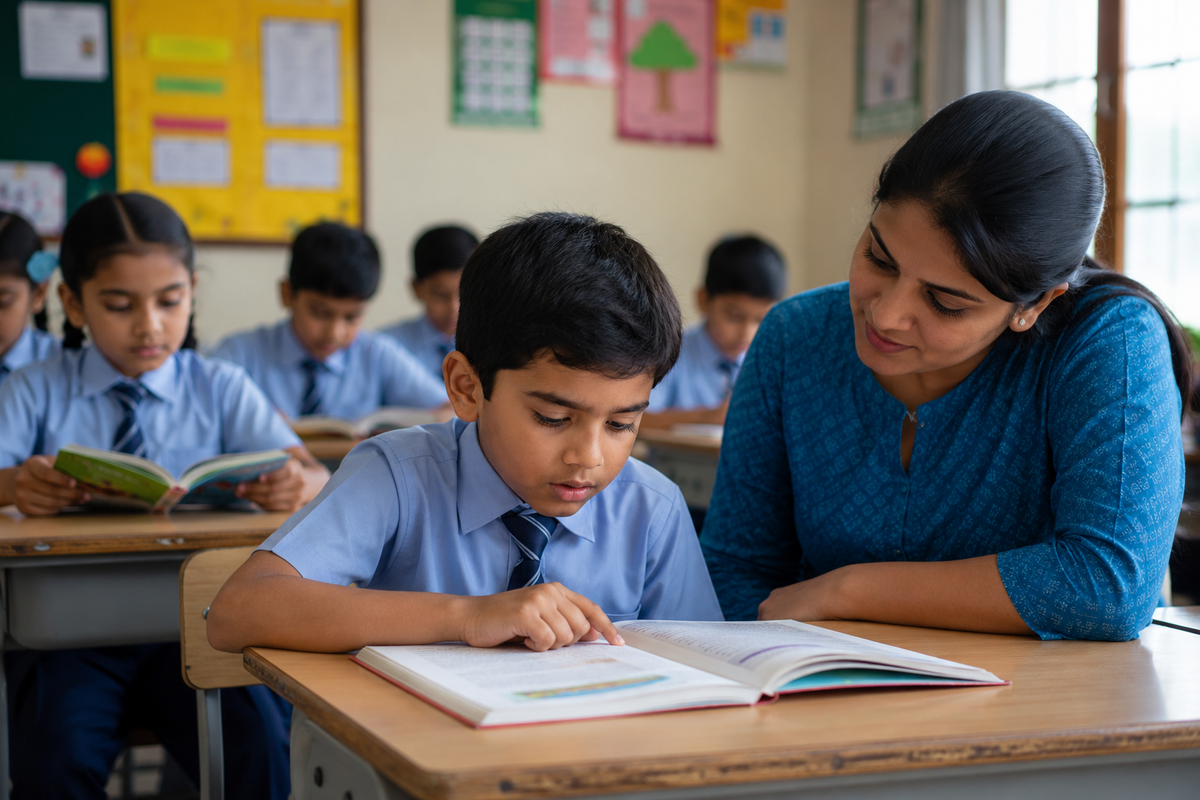
- Dyslexia: The most commonly misunderstood learning difference. Dyslexia is a neurological difference in phonological processing, the ability to connect letters to sounds. Children with dyslexia are often highly intelligent, creative, and verbally articulate, but their brains process print differently. Slow, effortful reading, frequent letter reversals, and poor spelling are hallmarks.
- Phonological Awareness Gaps: Some children have not yet consolidated the foundational sound-symbol relationships that underpin fluent reading. This is often missed in early schooling, especially in multilingual environments where children are simultaneously learning to read in two or more scripts.
- Visual Processing Difficulties: For some children, letters appear to move, blur, or swap positions on the page. This is not a vision problem (a standard eye test will not catch it) — it is a processing difference that requires specialist intervention.
- Weak Working Memory: Children with working memory difficulties lose track of earlier words by the time they decode later ones, making comprehension difficult even when individual word reading is accurate.
- Comprehension-Fluency Mismatch: Some children can decode accurately but read slowly because they are allocating so much cognitive effort to decoding that there is nothing left for meaning-making.
- English as an Additional Language: In multilingual India, many children are reading in English as a second or third language, which adds significant cognitive load to an already complex task.
What to Watch For
Slow reading that warrants professional evaluation typically presents alongside some of the following signs: avoidance of reading activities, complaints that the page looks 'blurry' or 'jumpy', guessing words from context rather than decoding, losing their place frequently, reversing similar letters (b/d, p/q), difficulty with rhyming, and reading that is significantly slower than peers, even with genuine effort.
The MANAS Learning Approach to Reading
At MANAS Learning, our remedial education specialists are trained in structured literacy approaches — the gold standard for reading intervention, backed by decades of neuroscience research. Structured literacy teaches reading explicitly and systematically, building from phonemic awareness through phonics, fluency, vocabulary, and comprehension in a carefully sequenced way.
We begin with a comprehensive assessment to identify precisely where a child's reading profile breaks down. Is it phonological awareness? Visual processing? Working memory? Comprehension? Each answer points to a different intervention pathway. There is no one-size-fits-all reading programme, and we would never pretend otherwise.

A Word About Time
Reading intervention works — but it takes time and consistency. Parents who come to us often ask: 'How long will it take?' The honest answer depends on the depth of the difficulty and the age at which intervention begins. Early identification — ideally before the age of 8 — produces the best outcomes, because the brain is most neurologically plastic in these years. But we have seen remarkable progress in children of every age when the right support is in place.
Your child is not a slow reader because they are lazy or incapable. They are a reader whose brain needs a different key to unlock the page. And those keys exist. At MANAS Learning, finding them is what we do.
📞 Book a free consultation at manaslearning.com — because every child deserves to be understood.
About the Author

Manasi Valluri
By Manasi Valluri | Founder, MANAS Learning | Educational Psychologist