

When Should Parents Worry About Speech Delay in Children?

Manasi Valluri
By Manasi Valluri | Founder, MANAS Learning | Educational Psychologist
The Comparison Trap
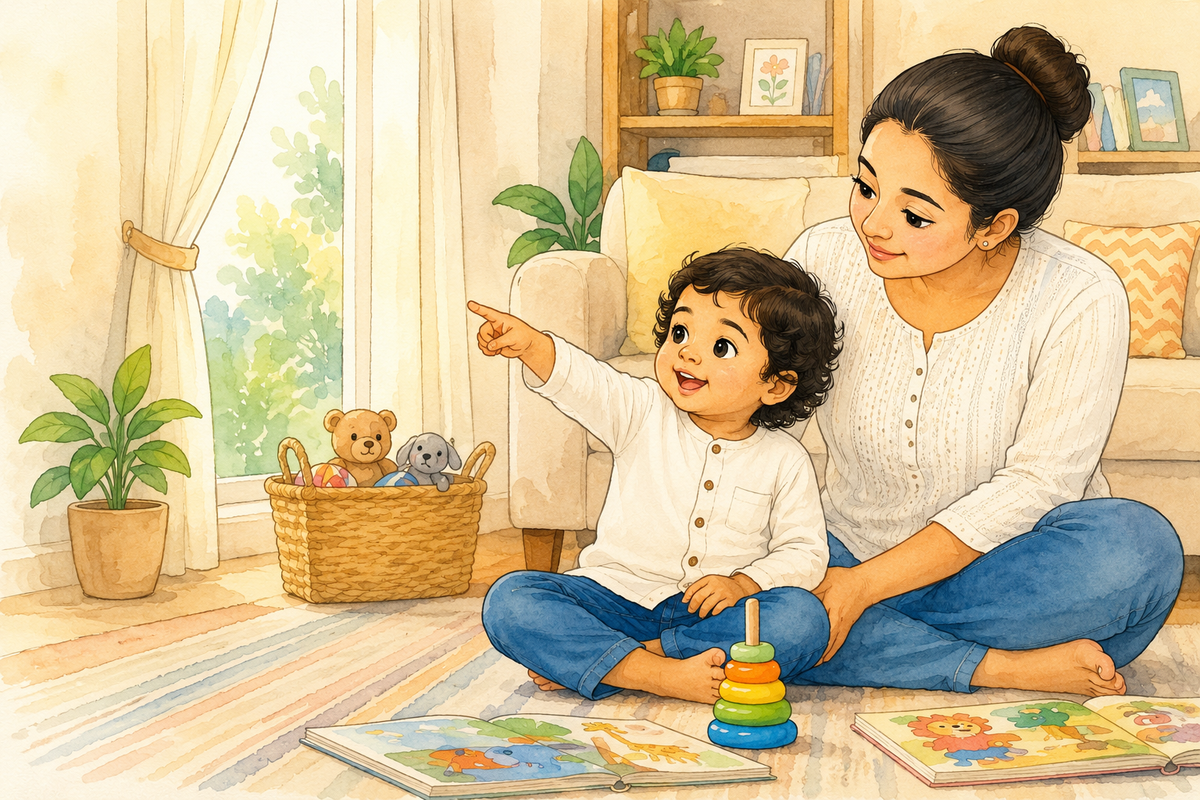
It starts at a playgroup or a family gathering. Someone else's two-year-old is putting together three-word sentences, and yours is still pointing and grunting. Or you notice your child's preschool classmates are speaking in paragraphs while your child uses single words. The relatives weigh in — 'Einstein was a late talker too!' — and you toggle between reassurance and a deep, nagging unease that something might be wrong.

I want to speak directly to that unease. It is valid. It is worth taking seriously. And in my experience as a psychologist and founder of MANAS Learning, early speech and language development is one of the areas where a parent's instinct is almost always right — and acting on it early makes an enormous difference.
Understanding the Difference: Speech vs Language
Before we talk about when to worry, it helps to understand the difference between speech and language — because they are not the same thing.

Speech refers to the physical production of sounds — the clarity and intelligibility of verbal communication. Language refers to the broader system of communication — vocabulary, grammar, understanding, and the ability to use language meaningfully. A child can have difficulties in either or both.
A child with a speech delay may understand everything that is said to them but have difficulty producing sounds clearly. A child with a language delay may have difficulty understanding or using language at an age-appropriate level, regardless of how clearly they can produce sounds.
Developmental Milestones: A Practical Guide
While every child develops at their own pace, the following are widely accepted research-based milestones. If your child is significantly behind any of these, an evaluation is warranted — not because something is definitely wrong, but because early support always works better than watching and waiting:
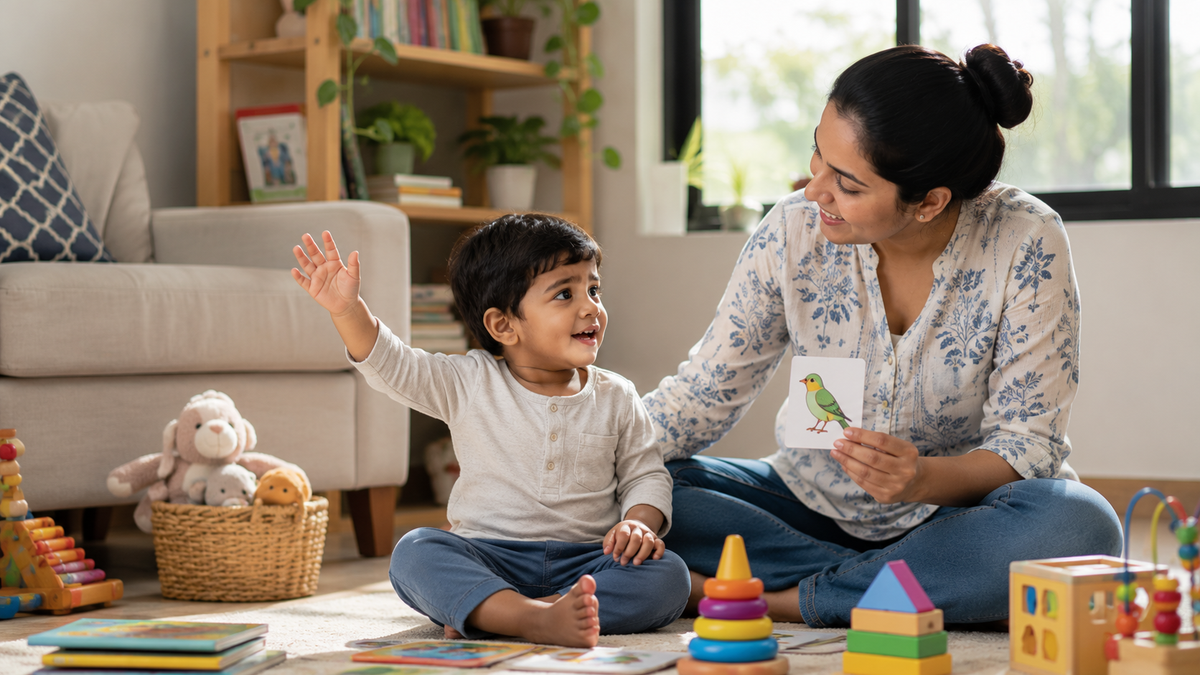
- By 12 months: Says 1–2 words ('mama', 'dada'), responds to their name, uses gestures like pointing or waving.
- By 18 months: Uses 10–20 words, follows simple instructions, points to show you things.
- By 2 years: Combines two words ('more milk', 'daddy go'), has a vocabulary of at least 50 words, strangers can understand about 50% of what they say.
- By 3 years: Uses 3–4 word sentences, can be understood by strangers about 75% of the time, follows two-step instructions.
- By 4 years: Tells short stories, asks 'why' questions, speaks clearly enough for strangers to understand almost all speech.
- By 5 years: Engages in back-and-forth conversation, uses correct grammar most of the time, can retell a story with beginning, middle, and end.
Red Flags That Warrant Immediate Evaluation
The 'wait and see' approach is not recommended if you observe any of the following, at any age:

- Loss of previously acquired speech or language skills (regression).
- No babbling by 12 months.
- No words by 16 months.
- No two-word combinations by 24 months.
- Absence of pointing or other communicative gestures.
- Does not respond to their name being called.
- Significant difficulty being understood by familiar adults.
- Very limited eye contact or social engagement during communication.
The 'Late Talker' Question
Some children — perhaps 10–15% of toddlers — are what we call 'late talkers': they have limited expressive vocabulary but appear to understand language well and show no other developmental concerns. Research shows that many late talkers do catch up by age 5 without intervention. However, this does not mean waiting is always the right choice. Studies also show that late talkers who receive early speech therapy make significantly faster progress — and avoid the secondary challenges (reading difficulties, social anxiety, academic struggles) that often develop when language delays are left unsupported.
At MANAS Learning, our speech therapists work with children from as young as 18 months, and our approach is always play-based, naturalistic, and family-centred — because the most important language learning happens in everyday interactions, not just in a therapy room.
What You Can Do Right Now
- Talk to your child constantly: narrate your day, describe what you are doing, name everything you see.
- Read aloud every single day, even to very young children.
- Reduce screen time: passive screen use does not develop language the way human interaction does.
- Avoid completing their sentences: give them the time and space to communicate.
- Follow their lead: talk about whatever they are interested in.
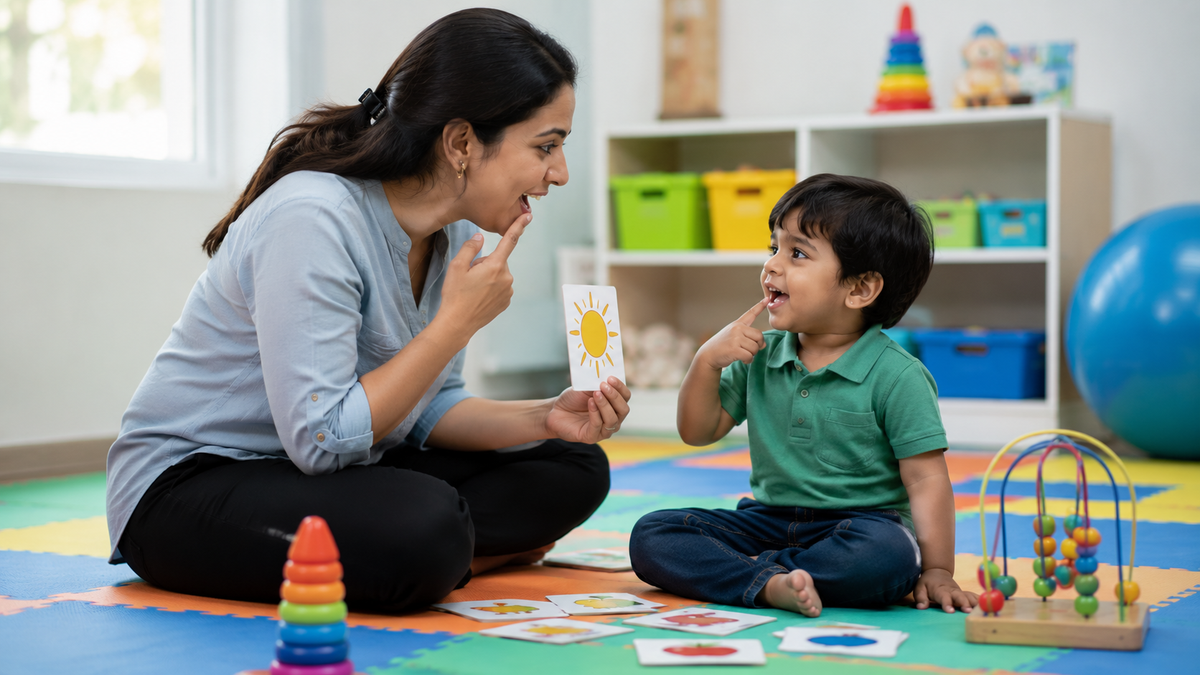
And if your instinct says something is off — trust it. You know your child better than anyone. A speech and language evaluation costs nothing but time, and it can set your child on a completely different trajectory.
📞 Book a free consultation at manaslearning.com — because every child deserves to be understood.
Topics
About the Author

Manasi Valluri
By Manasi Valluri | Founder, MANAS Learning | Educational Psychologist