


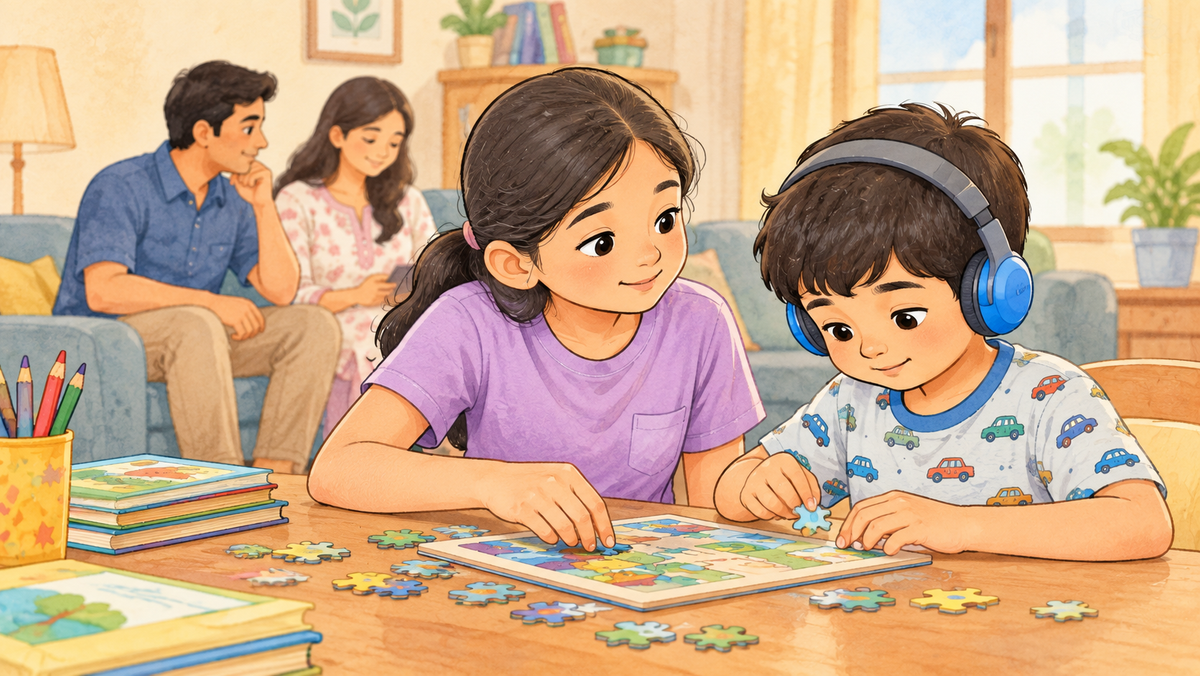
The Sibling Effect: Supporting the “Other Child” in a Neurodivergent Family

Manasi Valluri
By Manasi Valluri | Founder, MANAS Learning | Educational Psychologist
Family & Sibling Support
The Sibling Effect:
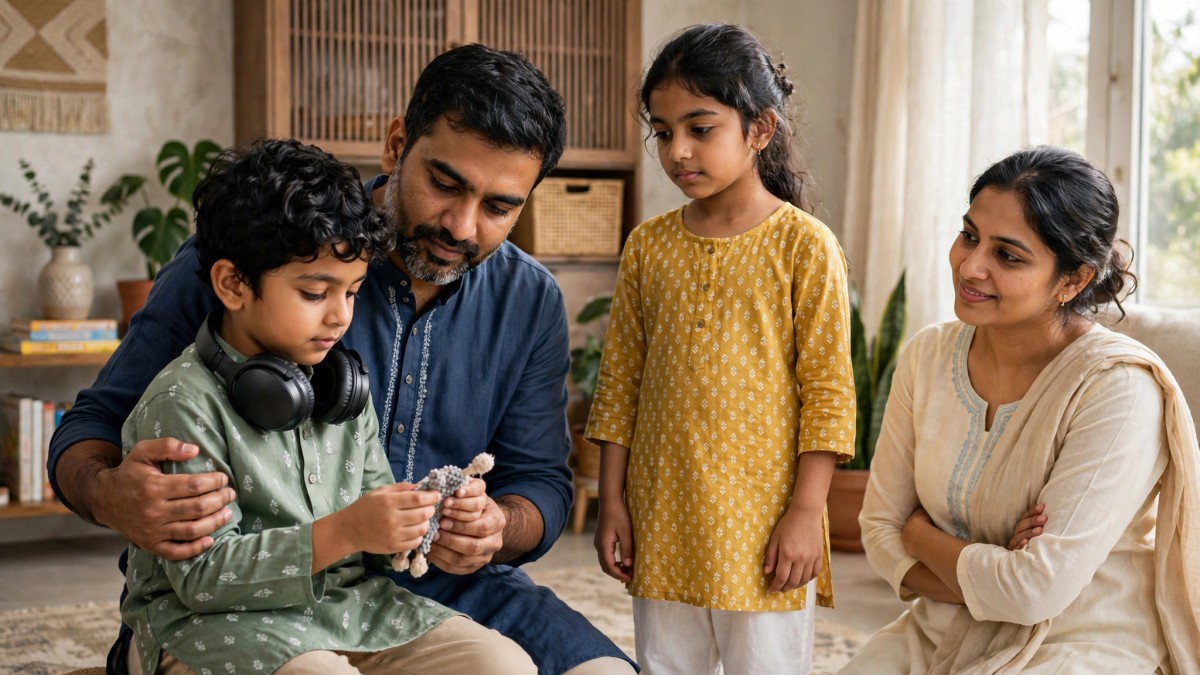
What Happens
to the “Other Child” in a Neurodivergent Family
Every
appointment, every IEP meeting, every crisis at pickup time — there's a sibling
standing quietly nearby, watching. She learns to entertain herself while you're
on the phone with the school. He learns not to ask for things when his brother
is already having a hard day. Somewhere along the way, without anyone deciding
it should be this way, the sibling of a neurodivergent child often becomes the
one who needs the least, simply because there's the least room left to need
anything.
Parents
feel the guilt of this acutely, and research confirms the instinct behind it is
real: growing up alongside a sibling with autism, ADHD, or another
developmental difference genuinely does shape a child's experience — though not
always, and not only, in the ways parents fear.
What the research actually shows
A
review summarising 14 studies on the psychosocial impact of growing up with an
autistic sibling found that autism appears to contribute to genuine
environmental stressors for the typically developing sibling — and when those
stressors combine with additional risk factors in the family, they can create
real difficulty adjusting to the demands of life alongside a sibling who needs
significant support.
More
specifically, research reviewing sibling experiences describes children who are
easily angered, embarrassed, frustrated, or upset by their autistic sibling's
behaviour — and, notably, who receive comparatively less parental attention
than their sibling with additional needs. This isn't a criticism of parents;
it's simply an honest description of where the hours in a day inevitably go
when one child's needs are more visible and more urgent.
A
South African qualitative study captured this in siblings' own words:
Participants described premature development — growing up faster than their
peers — alongside experiences of unfair treatment and feeling overburdened by
responsibilities beyond their years. Notably, the same study found something
parents rarely hear: many of these siblings also came to understand that their
neurodivergent brother or sister played a genuinely formative role in shaping
who they became, including their eventual career choices — a reminder that the
picture isn't only, or even primarily, one of harm.
The part that surprises parents most
It
would be easy to read this research as a simple warning, but the actual
findings are more nuanced, and more hopeful, than that. A comprehensive review
concluded plainly that growing up with a sibling with autism appears to
manifest in both positive and negative outcomes — and which direction a
particular child tends toward depends heavily on demographic, family, and
individual variables that parents have real influence over.
This
matters enormously, because it means the sibling outcome isn't fixed or
inevitable. Despite some genuine vulnerability to emotional and behavioural
difficulty, research is explicit that siblings have real potential not just to
adjust, but to thrive in the face of the specific challenges disability brings
into a family — the deciding factor is largely how those challenges are managed
and supported, not whether they exist at all.
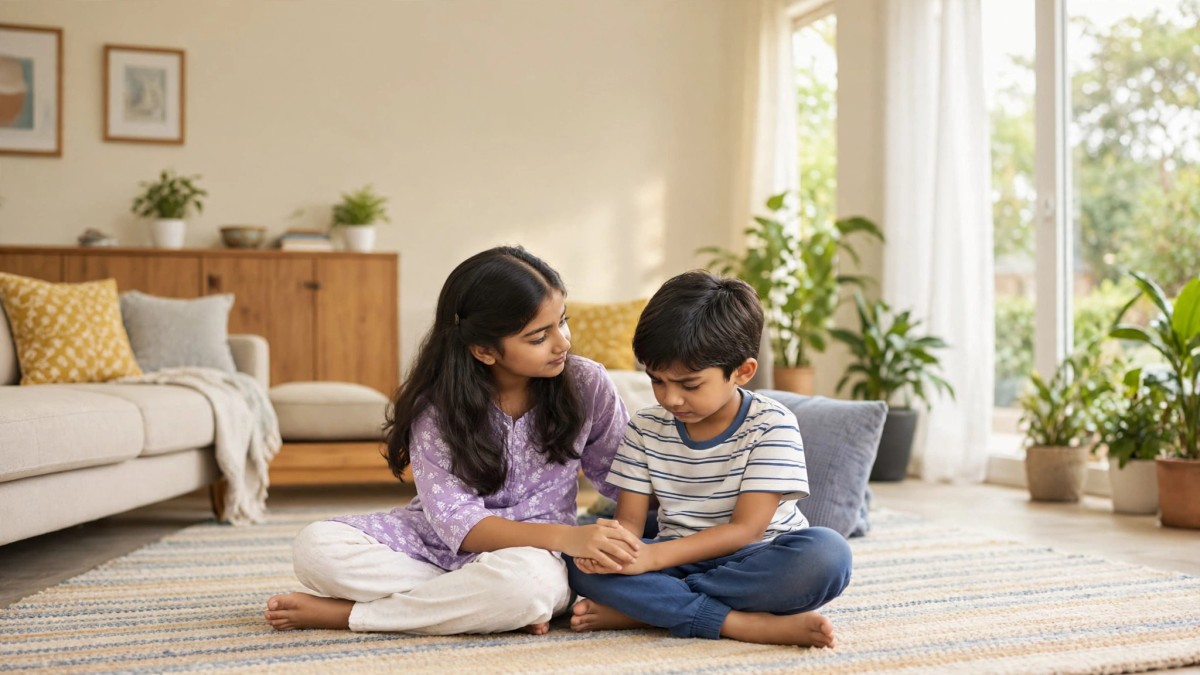
Where the risk is concentrated
Research
also helps clarify where extra attention matters most. Siblings of children
diagnosed with ADHD show an increased number of mental health challenges
compared to peers with typically developing siblings, and siblings of children
with autism spectrum disorder similarly show poorer adjustment outcomes on
average than children without a neurodivergent sibling. A separate line of
research adds an important layer: younger siblings of children with autism who
also have other family members with neurodevelopmental or psychiatric
conditions face a higher risk of developmental vulnerabilities themselves —
useful information for families thinking about whether to have their younger
children screened early, rather than waiting for concerns to surface on their
own.
Academic
performance is affected too, and not always in the direction parents assume.
Research on siblings of children with autism found they can experience genuine
anger, embarrassment, and frustration in response to their sibling's behaviour,
alongside the compounding effect of receiving less parental attention than
their sibling — both factors that plausibly affect how available they are for
their own schoolwork and emotional regulation.
What actually helps
Given
that outcomes depend heavily on family and individual variables rather than
being predetermined, a few concrete, research-informed steps make a real
difference:
● Protect dedicated one-on-one time with the
sibling, even in small amounts — the goal isn't equal time overall (which is
often genuinely impossible), but reliable, ring-fenced time that isn't
interrupted or reassigned
● Give siblings honest, age-appropriate
information about their brother or sister's diagnosis rather than vague
explanations — uncertainty and confusion tend to generate more anxiety than a
clear, honest answer
● Name their feelings without correcting them —
embarrassment, resentment, and frustration are normal reactions to a genuinely
hard situation, not signs of a bad sibling or a bad child
● Watch specifically for premature adultification
— a sibling quietly taking on caregiving or peacekeeping roles beyond their
years — and actively hand some of that responsibility back to adults
● Consider connecting them with sibling support
groups or peer programs specifically for brothers and sisters of neurodivergent
children, where they can compare notes with others living a similar reality
Formal
sibling support programs exist specifically because informal family effort,
however well-intentioned, often isn't enough on its own. These programs
typically combine psychoeducation about the sibling's condition, structured
opportunities to share experiences with peers in similar situations, and direct
coping-skills training — giving siblings tools and a wider circle beyond what
parents alone can provide, particularly when parents are themselves stretched
thin.
It's
worth being honest that these steps require intentional effort precisely
because they don't happen automatically — the urgent, visible needs of a
neurodivergent child will always pull attention first unless a family actively
protects space for the sibling too. That's not a failure of love; it's simply
how limited time and energy get allocated under real pressure, and naming that
reality is often the first step toward changing it.
A note for Indian joint and extended families
In
many Indian households, extended family and cultural expectations add another
layer to the sibling dynamic. An older sibling — particularly a daughter — may
be quietly expected by grandparents or relatives to “look after” a
neurodivergent brother or sister well beyond what's reasonable for their age,
simply because caregiving roles within Indian families often default informally
to whichever child seems most capable, regardless of age. It's worth having an
explicit conversation with extended family about what the sibling is and isn't
responsible for, rather than letting an unspoken expectation quietly settle
onto a child's shoulders over time.
Financial
and scheduling pressure compounds this further: if therapy costs and
appointments already stretch a family's time and resources thin, it's often the
sibling's own activities, tuitions, or simple downtime that get quietly
deprioritised first, precisely because their needs are the ones that can most
easily wait. Naming this trade-off honestly — rather than assuming the sibling
hasn't noticed — tends to land better than pretending the imbalance isn't
happening.
What to say when a sibling asks “why does he get more attention?”
This
question deserves a direct, honest answer rather than deflection. Something
like: “Right now your brother needs more help with some things than you do —
that doesn't mean he matters more; it means his needs are different right now.
I know that's not always fair to you, and I want to hear about it when it feels
that way.” Naming the imbalance out loud, rather than pretending it isn't
happening, is consistently what research-informed sibling support approaches
recommend — children can tolerate an honestly acknowledged imbalance far better
than one they sense but are never allowed to name.
It's
also worth revisiting this conversation as the sibling gets older, rather than
treating it as something explained once and settled. A six-year-old and a
fourteen-year-old need very different levels of detail and honesty about what's
happening in the family, and a sibling's own questions — about the future,
about fairness, about what will be expected of them as adults — tend to get
more sophisticated and more pressing with age, not less.
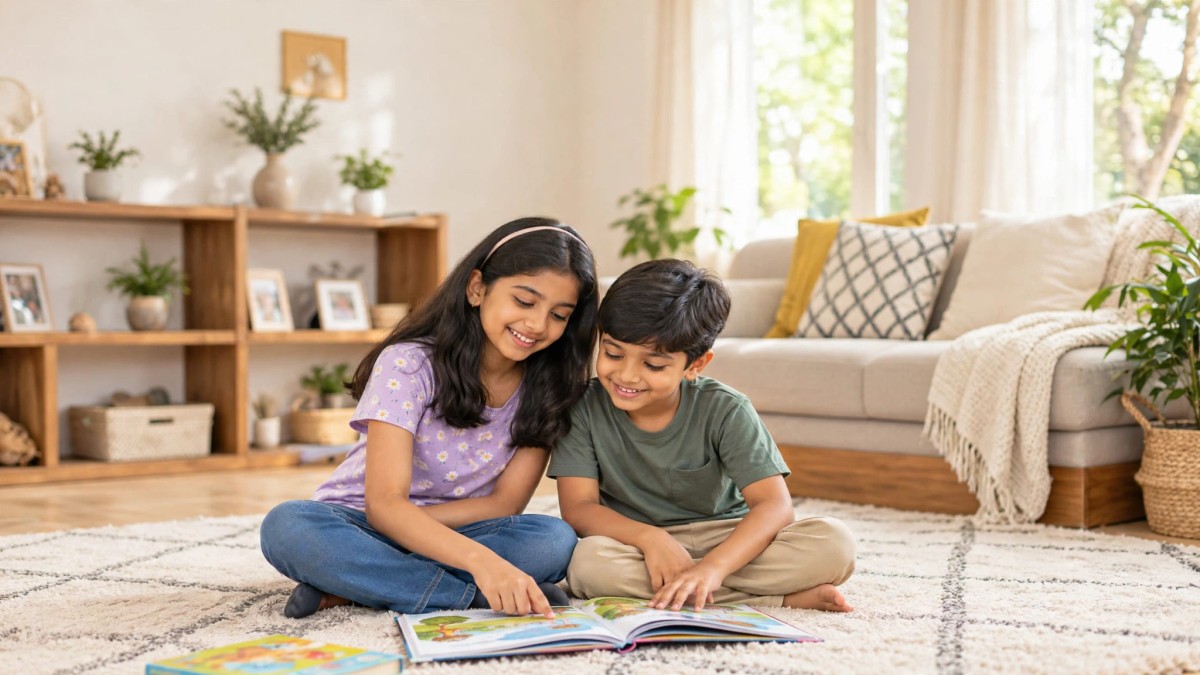
Wondering
how your other child is really doing?
We've
put together a short guide to help you check in with siblings in a way that
opens honest conversation rather than a reflexive “I'm fine” — plus concrete
ways to protect their time without adding more to your own plate.
📥 Free download: "Supporting the Sibling: A
Parent’s Guide to Checking In" — a free worksheet with age-appropriate
conversation starters, warning signs of premature adultification, and simple
ways to protect one-on-one time.
References
1.
Green, L. (2013). The Well-Being of Siblings of Individuals with Autism.
PMC3657443.
2.
Experiences of siblings of children with autism spectrum disorder. PMC9364443.
3.
Family psychiatric history: Effects on siblings of children with autism.
ScienceDaily / Yale Child Study Centre, Autism Research (2026).
4.
The Clinical Implications of the Academic Performance of the Siblings of
Individuals With Autism Spectrum Disorder. PMC9559693.
5.
Supporting Siblings of Children with Behavioural Needs. Behavioural Health News
(2025), citing Orm & Fjermestad (2021) and Meyer, Ingersoll & Hambrick
(2011).
Topics
About the Author

Manasi Valluri
By Manasi Valluri | Founder, MANAS Learning | Educational Psychologist