


Picky Eater or Sensory Feeding Issue? 8 Differences Every Parent Should Know

Manasi Valluri
By Manasi Valluri | Founder, MANAS Learning | Educational Psychologist

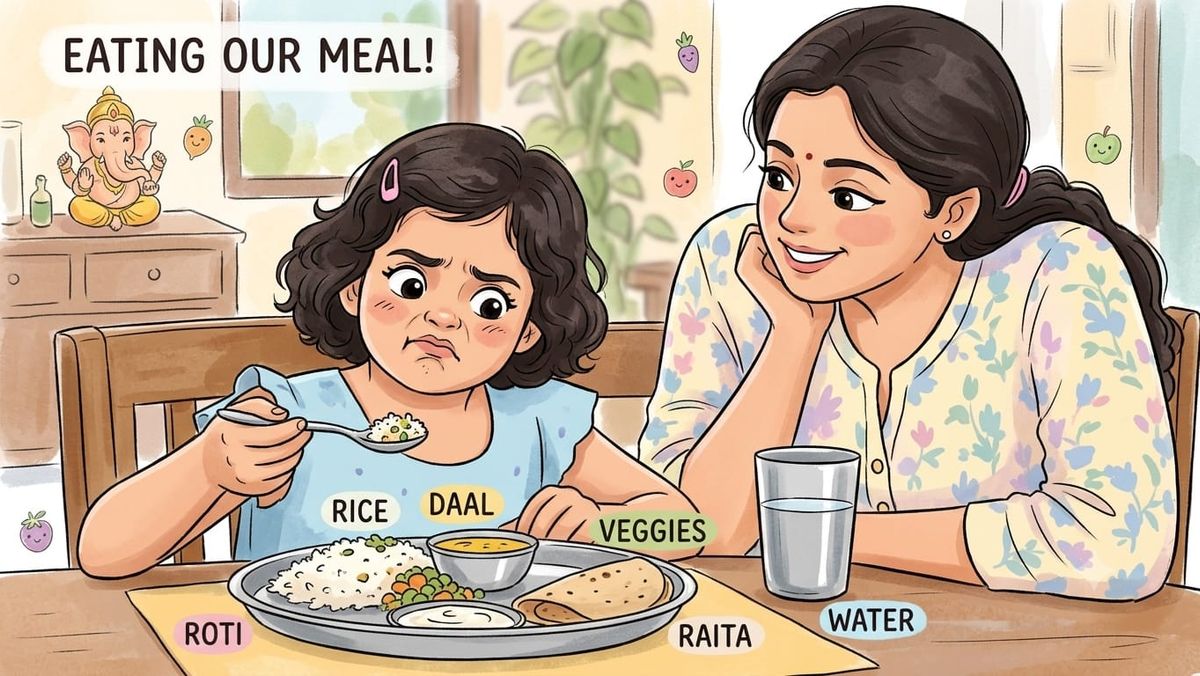
"He only eats rice and curd." "She gags if the dal touches the roti." "Mealtimes end in tears, mine and hers."
Feeding struggles are among the most exhausting parts of parenting, and the worry is real: is my child getting enough nutrition, and is this normal? The honest answer is that picky eating is very common in toddlers and preschoolers, and for most children it is a phase. But for a smaller group, the difficulty goes beyond fussiness and needs a different approach.
What is typical picky eating?
Between about 2 and 6 years of age, many children become more cautious about food, refuse new foods and swing between liking and disliking the same food (Carruth et al., 2004). This is thought to be part of normal development, as children begin asserting independence and become wary of unfamiliar things. A typically picky child usually:
- Still eats a reasonable variety, even if the list is shorter than you would like
- Will eventually try a new food after seeing it several times, or if a peer eats it
- Grows and gains weight along their own curve
- Does not become highly distressed when a new food is on the table
- Has an appetite that varies from day to day

When might it be a sensory feeding issue?
A feeding difficulty linked to sensory processing or oral-motor skills may be present when you see a pattern of the following. One sign alone is not a concern, but several together warrant evaluation:
- A very short list of accepted foods that keeps getting shorter, and foods that are dropped are never taken back.
- Strong reactions to texture, smell, temperature or appearance, such as gagging, retching or vomiting, even when the food is only near the plate.
- Foods must be one brand, colour or shape. A change in packaging, or a different batch, leads to refusal.
- Whole food groups are refused, for example, no vegetables, fruit or proteins, or only crunchy foods or only smooth foods.
- Extreme distress at mealtimes, with crying, running away, or meltdowns that go beyond typical toddler resistance.
- Chewing or swallowing difficulty, such as pocketing food in the cheeks, chewing for a long time, coughing or choking often, or drooling beyond the expected age.
- Other sensory sensitivities, such as to clothing tags, haircuts, loud sounds, messy hands or certain surfaces.
- Concerns about growth or energy, such as weight loss, flattening of the growth curve, frequent illnesses or tiredness. This is a reason to see a paediatrician promptly.
Research has found that food selectivity and sensory sensitivity are more common in autistic children than in typically developing children (Cermak et al., 2010), but sensory feeding difficulties also occur in children without autism.
Medical causes to rule out first
Before assuming a behavioural or sensory cause, check with your paediatrician. Reflux, constipation, food allergy or intolerance, dental pain, swallowing problems and iron deficiency can all affect appetite and eating (Kerzner et al., 2015). Feeding difficulties have medical, nutritional, skill-based and psychosocial parts, and a good evaluation considers all of them. A small number of children have a more severe pattern of restrictive eating with nutritional or growth consequences, sometimes called avoidant/restrictive food intake disorder (ARFID). Only a qualified clinician can make this assessment.

What you can try at home
These approaches are widely recommended for picky eaters. If your child has the signs of a sensory feeding difficulty, use them gently and talk to a therapist, since some children need a graded approach.
1. Share the responsibility. You decide what is offered, when and where. Your child decides whether to eat it and how much. Pressure, bribes and forced bites usually increase resistance.
2. Keep a regular schedule. Offer meals and snacks at consistent times, with a gap before the next one so that your child comes to the table hungry. Avoid constant grazing, and avoid filling up on milk or juice just before meals.
3. Always include one food your child reliably eats. A "safe food" on the plate takes some of the pressure off.
4. Offer new foods many times, with no pressure. Children often need repeated exposures, sometimes more than ten, before accepting a new food. Looking at it, touching it, smelling it and putting it on the plate all count as progress.
5. Play with food away from the table. Let your child squish, pour, stir and sort foods during play or cooking. Many children with sensory sensitivities need to get comfortable with the food before they can taste it.
6. Use small steps with similar foods. If your child eats only plain idli, try a very similar food such as a slightly different shape or a small change in the accompaniment, and move in small steps. Therapists call this approach "food chaining".
7. Eat together. Children copy what they see. Let them watch you eat a variety of foods without comment.
8. Keep mealtimes short and pleasant. About 20 to 30 minutes is enough. End the meal calmly even if little was eaten.
What to avoid
- Hiding foods in a way that your child discovers later, which can break trust
- Making a separate meal on demand for every meal
- Negative comments about eating
- Using screens to get food into a child, which can stop your child from noticing hunger and fullness
When to ask for a feeding evaluation
Seek an evaluation by an occupational therapist or speech-language pathologist with feeding experience, in addition to your paediatrician, if:
- Your child eats a very limited range of foods, or the range is shrinking
- There is gagging, choking, coughing or vomiting with eating
- There is difficulty chewing or moving food in the mouth
- Growth or weight is a concern
- Mealtimes cause significant distress for your child or your family
- Other developmental concerns exist, such as speech delay or sensory sensitivities
Feeding therapy looks at the child's sensory responses, oral-motor skills, posture and positioning, and the mealtime environment, then builds a step-by-step plan that parents can carry out at home.

You are not failing
Parents of children with feeding difficulties are often blamed. It is not caused by "bad parenting" or "too much indulgence". With the right assessment and a consistent plan, many children widen the range of foods they accept.
CTA: Book a free counselling session | Ask about an assessment | Learn how the Home Program can support mealtime routines
Suggested lead magnet: "Picky Eater or Something More? A 12-Question Checklist" with a food-exploration ladder (look, touch, smell, lick, taste) and a one-week food diary.
References
- Carruth, B. R., et al. (2004). Prevalence of picky eaters among infants and toddlers and their caregivers' decisions about offering a food. Journal of the American Dietetic Association, 104(1 Suppl 1), S57-S64.
- Cermak, S. A., Curtin, C., & Bandini, L. G. (2010). Food selectivity and sensory sensitivity in children with autism spectrum disorders. Journal of the American Dietetic Association, 110(2), 238-246.
- Kerzner, B., et al. (2015). A practical approach to classifying and managing feeding difficulties. Paediatrics, 135(2), 344-353.
- Satter, E. The Division of Responsibility in Feeding (ellynsatterinstitute.org).
- American Psychiatric Association. (2013). Diagnostic and Statistical Manual of Mental Disorders (5th ed.): Avoidant/Restrictive Food Intake Disorder.
About the Author

Manasi Valluri
By Manasi Valluri | Founder, MANAS Learning | Educational Psychologist