



My Child Is Not Talking — When Should I Be Worried?
Manasi valluri
Clinical Psychologist | 10+ Years | 3,500+ Child Assessments
Child Not Talking: What Every Parent Needs to Know
In my clinic, few concerns come with as much raw parental anxiety as this one.
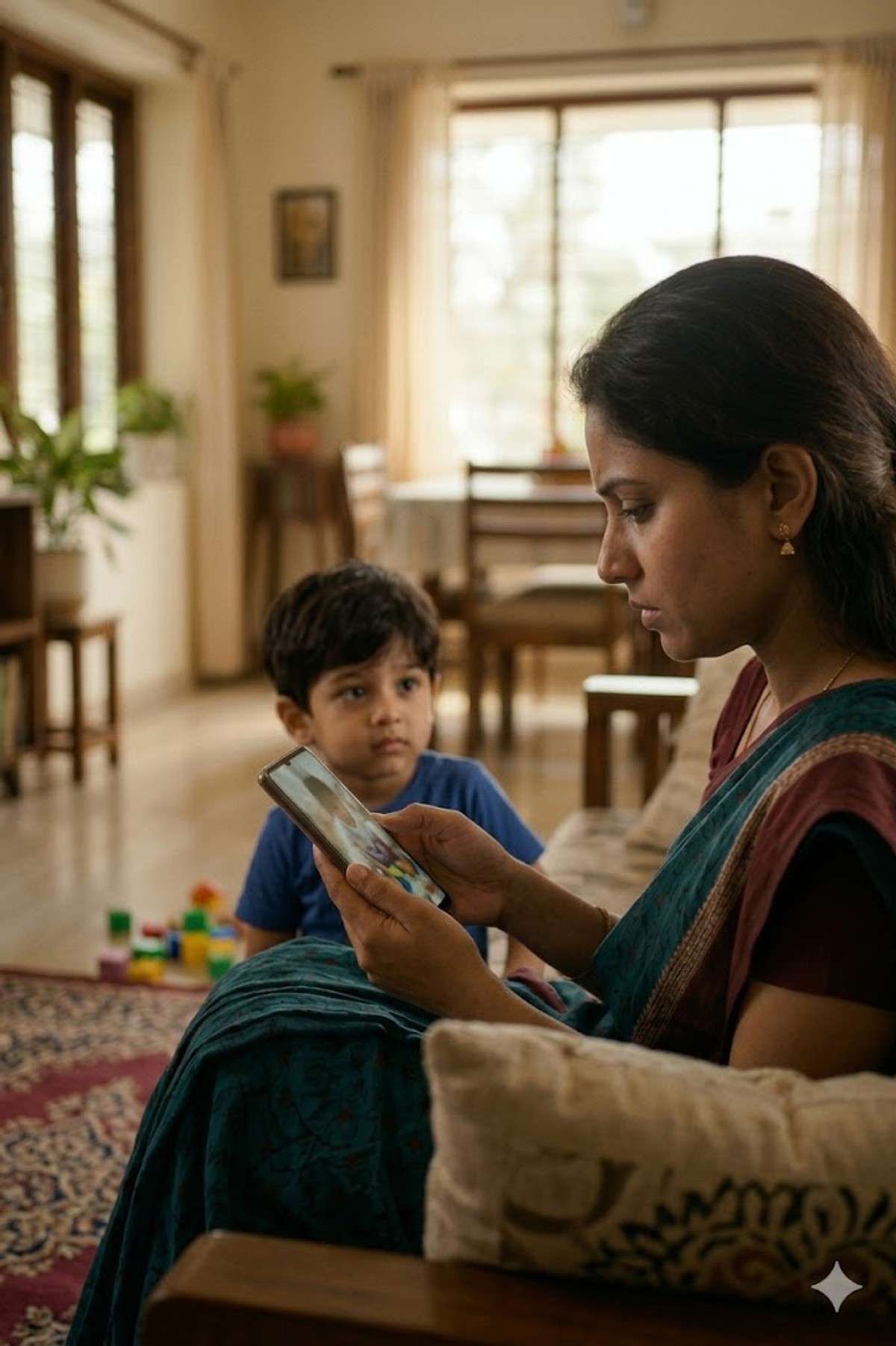
A mother shows me a video on her phone — her 22-month-old son, playing happily, but silent. No words. No pointing. Just play.
“Everyone says boys are slower,” she tells me. “But something feels wrong.”
Her instinct was correct.
A child not talking at the expected developmental stage is one of the most important early red flags in child development. But — and this is equally important — not all speech delays are the same.
The reason behind a child not talking determines everything:
- Who you should consult
- What tests are required
- What outcomes are possible
Let me walk you through this clearly.
"A child not talking is not always a child who cannot talk. The distinction matters — and only a proper assessment can tell you which it is.”
Normal Speech and Language Milestones
Before assessing a child not talking, we need a baseline.
Here is what research-backed developmental science tells us to expect (WHO Child Development Standards; ASHA, 2022):
By 12 months:
- At least 1–3 meaningful words (mama, dada, baba)
- Responds to name
- Uses pointing or gestures
By 18 months:
- Minimum 10–20 words
- Points to show interest
- Uses words to communicate needs
By 24 months:
- 50+ words
- Combines 2 words ("more milk", "daddy go")
- Strangers understand ~50% of speech
By 36 months:
- 200+ words
- Uses 3-word sentences
- Strangers understand ~75% of speech
By 48 months:
- Tells simple stories
- Asks “why” questions
- Strangers understand ~90% of speech
A child not talking at or near these milestones — especially if multiple milestones are missed — requires prompt evaluation, not watchful waiting.
What to Observe: A Parent Checklist
Language
- Does the child respond to their name?
(Absent by 12 months = significant red flag) - Does the child use words intentionally to communicate?
(Not just repetition or echolalia) - Is the child not talking but making sounds — or completely silent?
(No babbling by 12 months is a red flag) - Does the child understand language even if not talking?
(Receptive vs expressive language difference is clinically important)
Social Communication
- Does the child make eye contact?
(Reduced eye contact along with a child not talking is a strong red flag) - Does the child point to share interest?
(Joint attention is a key milestone) - Does the child imitate actions or sounds?
(Imitation is foundational for language development) - Does the child engage in back-and-forth play (turn-taking)?
Behaviour
- Is the child not talking but communicating through gestures or by leading you?
- Is there any regression — loss of previously acquired words?
(This requires immediate evaluation) - Is the child not talking along with repetitive behaviours (lining up toys, spinning, hand-flapping)?
- Does the child appear uninterested in people?
"Language regression — losing words a child previously had — is never just a phase. It requires urgent assessment."
Possible Reasons a Child Is Not Talking: Who to Consult and Tests Required
1. Speech Delay / Expressive Language Delay
The child understands language, makes eye contact, and communicates through gestures, but speech is delayed.
Consult:
Speech-Language Pathologist (SLP), Audiologist
Tests:
Audiometry (pure-tone and speech), REELS, CELF-P2, MacArthur-Bates CDI
2. Hearing Impairment
A child not talking may not be hearing language clearly.
Consult:
Audiologist, ENT Specialist
Tests:
OAE, ABR/BERA, Pure Tone Audiometry, Tympanometry
3. Autism Spectrum Disorder (ASD)
A child not talking along with social and behavioural differences.
Consult:
Clinical Psychologist, Developmental Paediatrician, SLP
Tests:
ADOS-2, ADI-R, CARS-2, M-CHAT-R/F, Vineland Scales
4. Intellectual Disability (ID)
Delay across multiple developmental areas.
Consult:
Clinical Psychologist, Developmental Paediatrician, Neurologist
Tests:
Bayley Scales (BSID-III), MISIC/WISC-V, Vineland-3
5. Childhood Apraxia of Speech (CAS)
Consult:
Speech-Language Pathologist (CAS specialist)
Tests:
DEMSS, Kaufman Speech Praxis Test
6. Selective Mutism
Consult:
Clinical Psychologist (CBT specialist)
Tests:
CBCL, SCARED, Clinical Interview
7. Neurological Conditions
(Landau-Kleffner Syndrome, Rett Syndrome, etc.)
Consult:
Paediatric Neurologist (urgent if regression is present)
Tests:
EEG, MRI Brain, Genetic Testing
Frequently Asked Questions
Q: My child is 18 months and not talking. Should I wait?
No.
At 18 months, a child should have:
- At least 10 meaningful words
- Pointing to share interest
If these are absent, seek evaluation immediately.
Q: My child understands everything but does not speak. Is that a concern?
Yes, evaluation is still necessary.
Possible reasons include:
- Expressive language delay
- Childhood apraxia
- Early autism
Q: Can excessive screen time cause a child not to talk?
Yes, it can contribute to delays.
However:
- Reducing screen time alone is not enough
- Professional evaluation is still important
Q: My son is 2.5 years old and not talking. Family says boys talk late. Is that true?
No.
Developmental red flags are the same for all children.
A 2.5-year-old not talking requires evaluation.
Book an Assessment with MANAS Learning
Early identification changes outcomes.
Our team of experienced clinical psychologists provides:
- Comprehensive child assessments
- Support for learning, attention, speech, and behaviour
Do not wait — the right support at the right time makes all the difference.
References
ASHA (2022)
CDC (2023)
Zwaigenbaum et al. (2015)
Disclaimer
This blog is for educational purposes only. It does not constitute diagnosis or professional advice. Please consult a qualified professional for individual concerns