


My Child Doesn't Respond to His Name or Make Eye Contact: What Could It Mean?
Manasi valluri
Clinical Psychologist | 10+ Years | 3,500+ Child Assessments
Child Not Responding to Name or Eye Contact: Causes and Next Steps Meta description: Not responding to name or avoiding eye contact has many possible causes, including hearing, attention and autism. Learn what to observe and when to get help. Slug: /blogs/child-not-responding-to-name-eye-contact
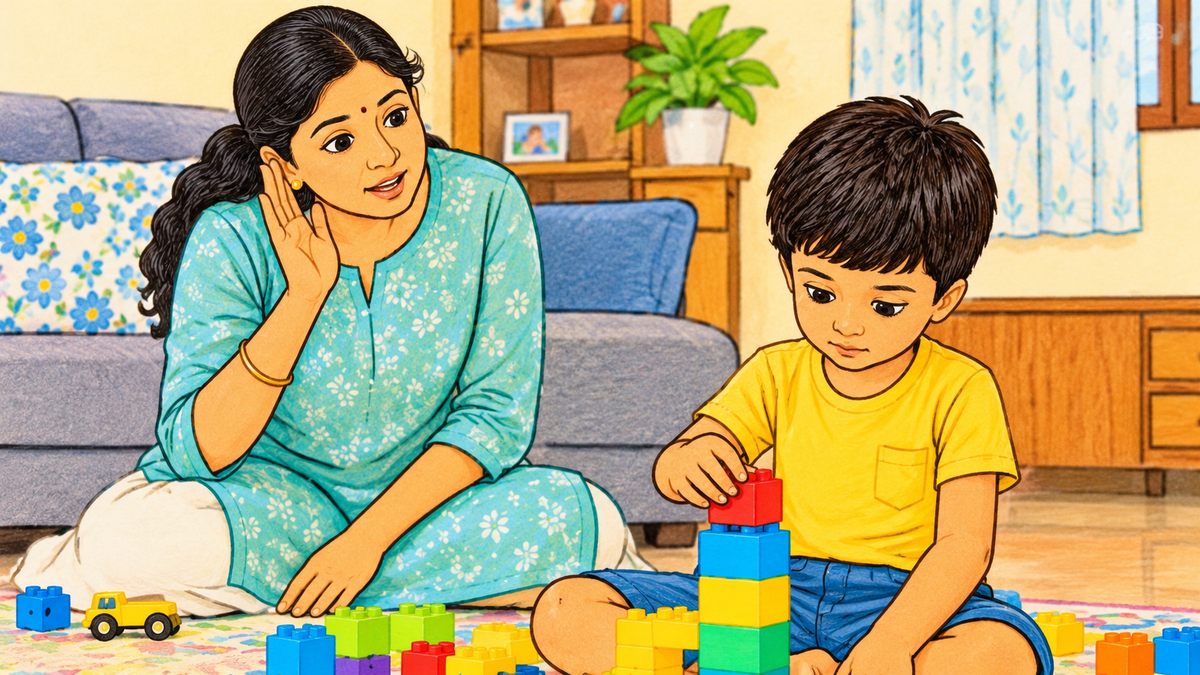
You call your child's name. Nothing. You call again, louder, and still nothing, yet when the biscuit packet opens in the next room, he arrives immediately. Many parents describe this, and it is one of the most common reasons they search online and then lie awake at night.
It is important to say at the start that not responding to name and limited eye contact do not by themselves mean a child is autistic. They are signs that deserve a closer look, and the causes can be very different.
Why might a child not respond to his name?
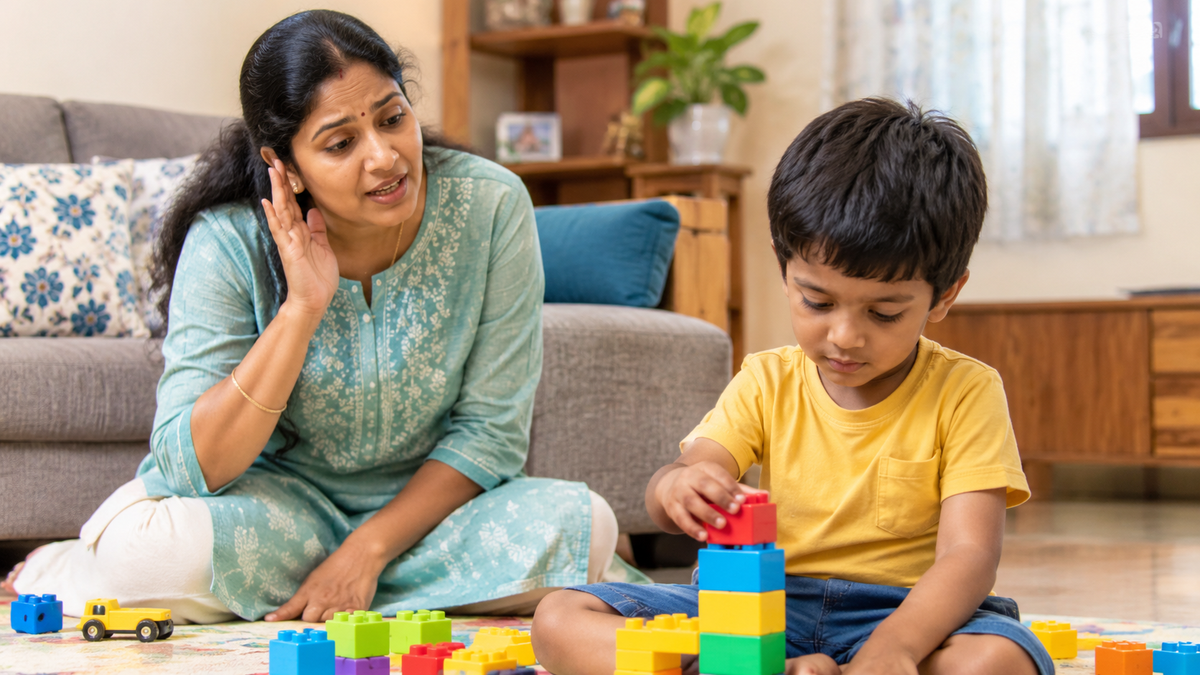
- Hearing difficulty. This is the first thing to rule out. Fluid in the ear, a temporary infection or a permanent hearing loss can all make a child appear to ignore you. Children who respond to loud or interesting sounds can still have hearing difficulty at some pitches or volumes.
- Deep focus. Some children are intensely absorbed in play or screens and need more than a call from across the room.
- Language difficulty. A child who does not yet understand that the sound is their name, or does not understand language well, may not respond.
- Attention differences, such as in ADHD, where attention shifts easily.
- Autism spectrum differences. Differences in social attention, including reduced response to name, are among the early behaviours researchers have studied in infants later diagnosed with autism (Miller et al., 2017). It is one sign among several, not a diagnosis.
- Temperament or anxiety. Some shy or anxious children withdraw from attention.
Because the possible causes are so different, the right first step is a proper evaluation, and guessing is not helpful.
When should a child respond to his name?
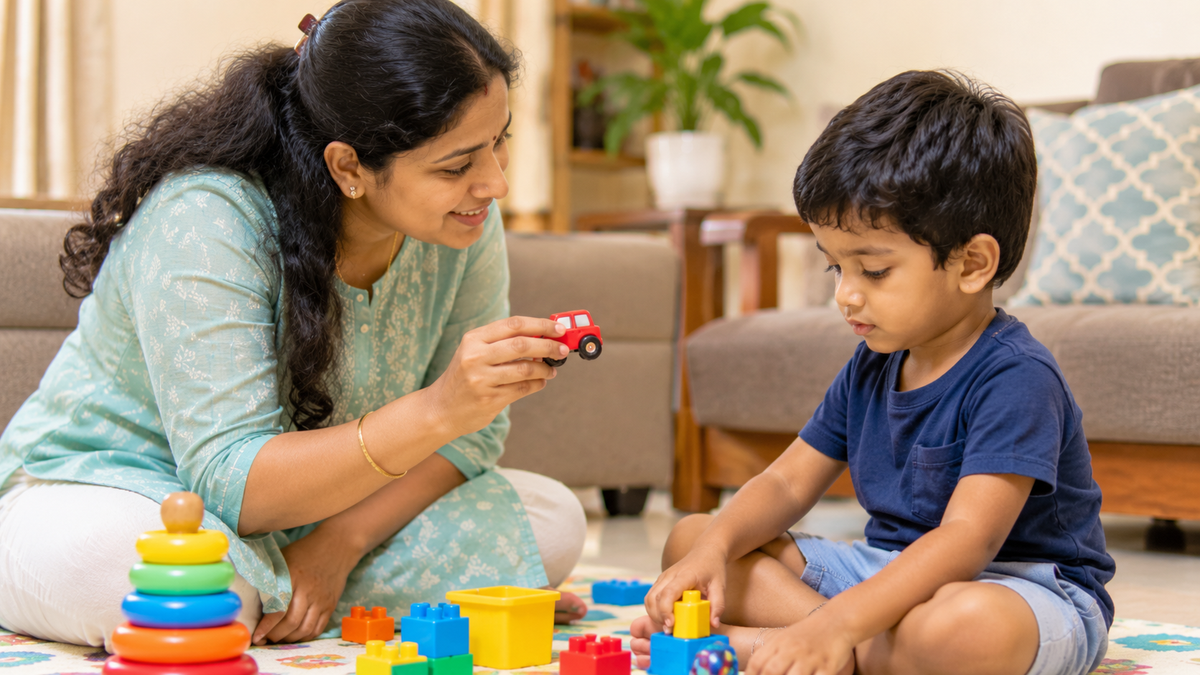
Most babies start turning toward their name between about 6 and 12 months. By 12 months this is expected in most typically developing children. A child who consistently does not respond, in different places and with different people when the environment is quiet, merits an evaluation.
A note on eye contact and Indian families
Eye contact carries different meanings in different cultures. In many Indian homes children are taught to lower their eyes in front of elders as a sign of respect, so we do not judge eye contact by how a child behaves with a visiting uncle or a stranger. A better question is: does your child look at you, in a warm, spontaneous way, during play, feeding or when they want something? Does your child look at your face to share enjoyment, check your reaction or ask for help? These are the interactions clinicians watch for.
What matters more than eye contact alone: the bigger picture
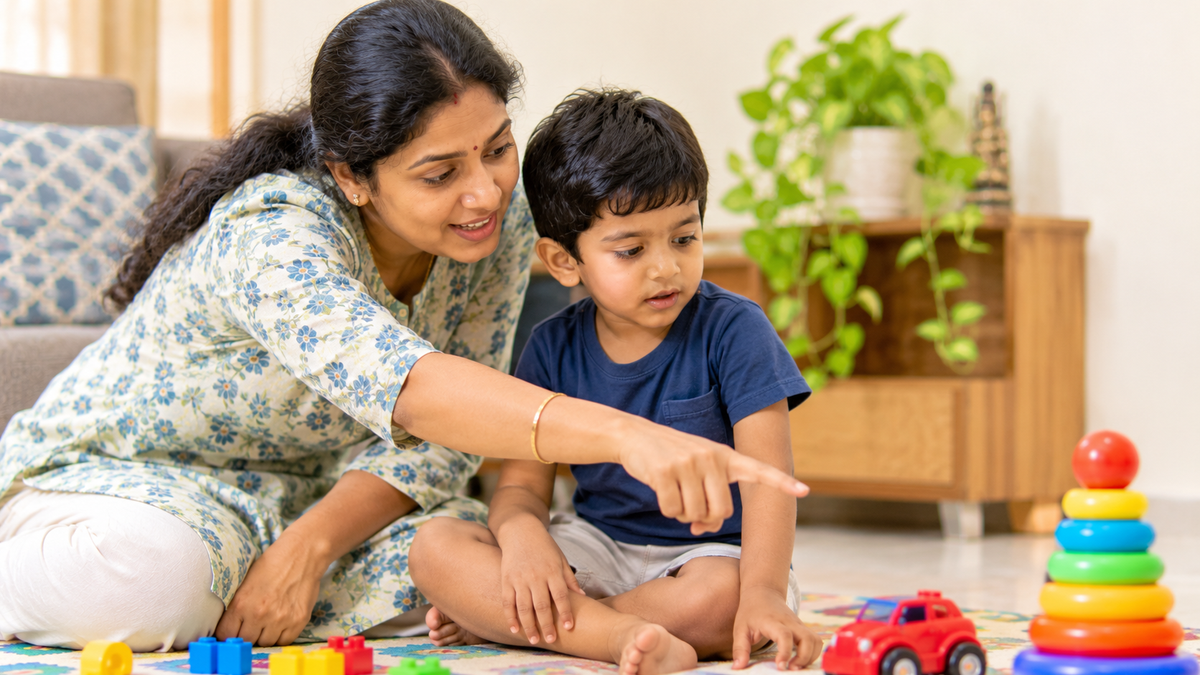
A single behaviour rarely tells the whole story. Clinicians look at a cluster of behaviours, such as:
- Pointing to show you something, not only to ask for something
- Showing and giving you objects to share interest
- Following your point or your gaze
- Social smiling and sharing enjoyment
- Imitating actions and sounds
- Back-and-forth play, such as peek-a-boo
- Babbling, words and gestures appropriate for age
- Unusual repetitive movements, strong fixation on parts of objects, or distress at small changes
- Loss of previously acquired skills (seek an evaluation promptly)
If several of these are present, an evaluation is strongly recommended. The American Academy of Pediatrics recommends autism-specific screening at 18 and 24 months, in addition to regular developmental surveillance (Hyman et al., 2020). The M-CHAT-R/F is a commonly used parent questionnaire for toddlers aged 16 to 30 months. It is a screening tool and not a diagnosis (Robins et al., 2014).
A five-minute observation you can do at home
Over one week, pick two or three calm moments and watch quietly:
- Call your child's name once from about 2 metres away, when he is not engrossed. Note whether he turns, pauses, looks or does not respond. Try again after a few minutes, up to three times.
- Hold up a favourite toy next to your face. Does he look at the toy, then at you?
- Point to something across the room and say "Look!" Does he follow your point?
- Play peek-a-boo. Does he anticipate it and want more?
- Write down what you saw, the time of day and what he was doing.
Do not do this to test your child. It gives you something specific to share with a professional.

What to do next
- Get hearing checked by an audiologist. Do not skip this even if your child seems to hear loud sounds.
- Speak to your paediatrician and share your observations.
- Book a developmental assessment with a team that looks at speech, play, social communication and sensory processing together.
- Do not wait for a diagnosis to start helping. Strategies that encourage interaction, such as playing face to face, imitating your child's sounds and actions, and following their lead, are helpful for all children and can start now.
A word for parents
If your child is later found to have a difference or delay, this does not mean you did something wrong. Early support helps children use their strengths, and early identification gives you time and choices. If everything turns out to be fine, you will have lost nothing.
CTA: Book a free counselling session | Take the online assessment | Join our WhatsApp parent community
Suggested lead magnet: "Home Observation Log: Name Response, Eye Contact and Shared Attention", a one-week printable diary to take to your paediatrician or therapist.
References
- Hyman, S. L., Levy, S. E., & Myers, S. M. (2020). Identification, evaluation, and management of children with autism spectrum disorder. Pediatrics, 145(1), e20193447.
- Miller, M., et al. (2017). Response to name in infants developing autism spectrum disorder: A prospective study. The Journal of Pediatrics, 183, 141-146.
- Robins, D. L., et al. (2014). Validation of the Modified Checklist for Autism in Toddlers, Revised with Follow-up (M-CHAT-R/F). Pediatrics, 133(1), 37-45.
- Zubler, J. M., et al. (2022). Evidence-informed milestones for developmental surveillance tools. Pediatrics, 149(3), e2021052138.