



My Child Covers Their Ears — What It Means & Who to Consult
6 min read
Manasi Valluri
Child Psychologist | 10+ Years | 3,500+ Child Assessments
Child Covering Ears: A Symptom That Deserves Serious Attention
- A parent once described it this way:
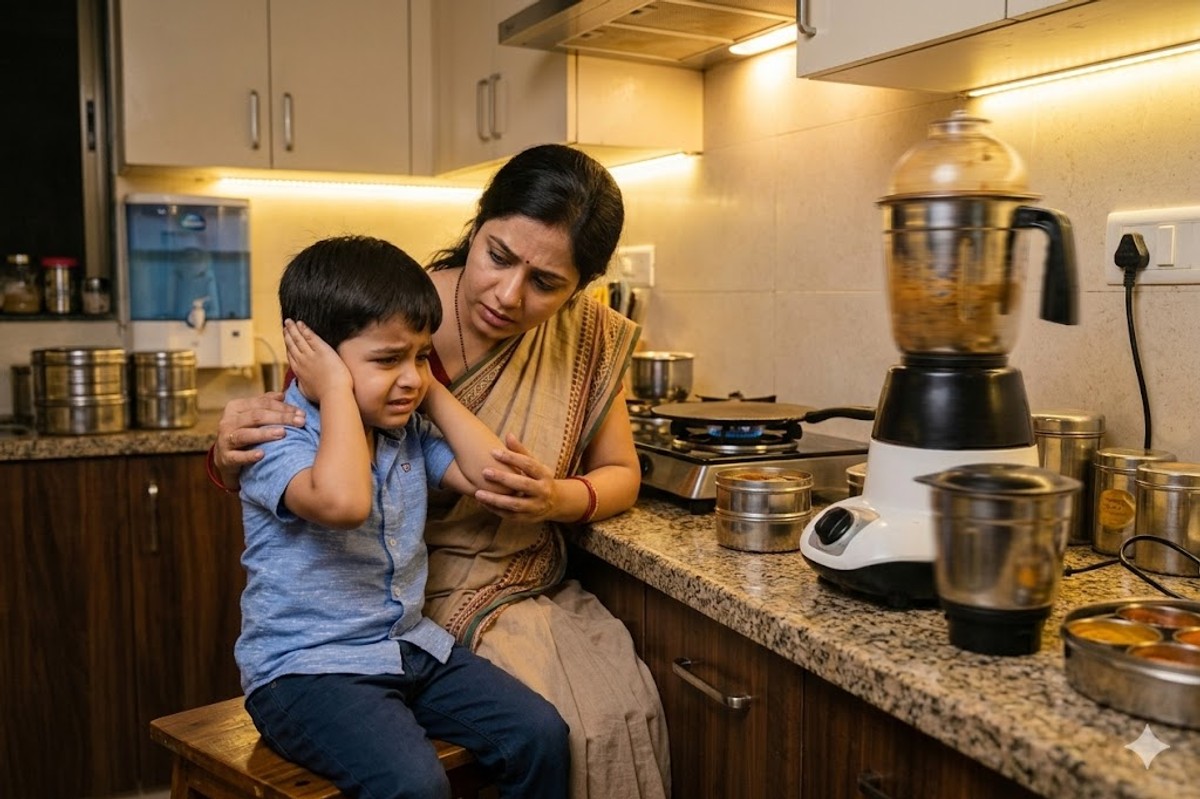
'He covers his ears at birthday parties, at the market, when the blender runs, when someone claps. He screams like he is in pain. But the audiologist says his hearing is fine. So what is happening?' - This is one of the most confusing presentations parents encounter:
- Child reacts to sound as if it is physically harmful
- Hearing tests show no impairment
- A child who consistently and distressingly covers their ears:
- Is communicating something neurologically important
- Behaviour is never “just sensitivity”
- Rarely resolves on its own
- Key Insight:
"When a child covers their ears, they are not being dramatic. They are telling you that their nervous system is overwhelmed. Listen carefully."

Their Ears
- Ear-covering in response to sound is technically called:
- Hyperacusis
- Misophonia
- It can arise from multiple underlying causes
- Important: Do not assume without proper assessment
1. Sensory Processing Disorder (SPD) — Auditory Hypersensitivity
Technical Name:
- Sensory Over-Responsivity (SOR) — Auditory Domain
What Happens
- Nervous system processes sound with exaggerated intensity
- Brain’s auditory filtering system is dysregulated
- Background sounds feel loud and distressing
Clinical Evidence
- Measurable physiological responses confirm it is real (not attention-seeking)
Associated Behaviours
- Covering ears in:
- Crowds
- Malls
- Kitchens
- Assemblies
- Distress from:
- Hand dryers
- Vacuum cleaners
- Loud voices
- Music
- Meltdowns in noisy environments
- Preference for quiet spaces
Whom to Consult
- Occupational Therapist (Sensory Integration trained)
- Clinical Psychologist
Questions to Ask
- Do you use Sensory Integration Therapy?
- Do you assess multiple sensory domains?
- What is your Sensory Diet approach?
2. Autism Spectrum Disorder (ASD)
Technical Name:
- Autism Spectrum Disorder (DSM-5)
Key Insight
- Sensory hypersensitivity is part of diagnostic criteria
Research Findings
- Present in 70–85% of children with ASD
- One of the most distressing daily challenges
Watch for Additional Signs
- Reduced eye contact
- Limited social communication
- Delayed or atypical language
- Repetitive behaviours
Whom to Consult
- Clinical Psychologist (ADOS-2 trained)
- Developmental Paediatrician
- Speech-Language Pathologist
Questions to Ask
- Are you ADOS-2 trained?
- Do you follow DSM-5 criteria?
- Will you assess adaptive behaviour?
- How will you communicate results to school?
3. Hyperacusis (Sound Sensitivity Without Hearing Loss)
Technical Name:
- Hyperacusis (ICD-10: H93.19)
What Happens
- Normal sounds feel painfully loud
- Child experiences real auditory pain
Common Triggers
- Cutlery sounds
- Crowds
- Sudden loud noises
- Echoing spaces
- Public bathrooms
Whom to Consult
- Audiologist (Hyperacusis specialist)
- ENT Surgeon
Tests Needed
- Loudness Discomfort Levels (LDL)
- Uncomfortable Loudness Levels (ULL)
- Not just standard audiometry
Questions to Ask
- Can you test LDL specifically?
- Experience with paediatric hyperacusis?
- Is sound desensitisation therapy suitable?

4. Misophonia
Technical Name:
- Misophonia (not yet DSM-5 classified)
What Happens
- Strong emotional reaction to specific sounds
Common Triggers
- Chewing
- Slurping
- Breathing
- Pen-clicking
Key Difference
- Trigger-specific (unlike hyperacusis)
Whom to Consult
- Clinical Psychologist
- Audiologist
Questions to Ask
- Experience with CBT or tinnitus retraining?
- How do you differentiate misophonia?
5. Anxiety Disorder
Technical Name:
- Generalised Anxiety Disorder (GAD) / Specific Phobia
What Happens
- Ear-covering due to fear or past negative experience
Key Difference
- Psychological trigger (not sensory processing issue)
Whom to Consult
- Clinical Psychologist (CBT trained)
Questions to Ask
- Can you differentiate sensory vs anxiety behaviour?
- Do you use CBT or exposure therapy?
Important Insight
- "The most important question is not just — whom do I see? — but — what do I ask when I get there?"

Parent's Question Guide
For the Occupational Therapist
- Are you trained in Sensory Integration Therapy?
- Which assessment tools will you use?
- Will you assess all sensory systems?
- Will you provide a Sensory Diet?
For the Clinical Psychologist
- Will you assess ASD, anxiety, and sensory processing together?
- Are you ADOS-2 certified?
- Will your report meet school/RCI standards?
- Will you give home & classroom strategies?
For the Audiologist
- Will you test LDL (not just audiometry)?
- Experience with paediatric hyperacusis?
- Do you provide desensitisation therapy?
What You Can Do at Home Right Now
- Use noise-cancelling earmuffs or ear defenders
- Prepare the child before noisy situations
- Example: “We are going to the mall — it will be loud”
- Avoid forcing exposure
- Track triggers:
- Sounds
- Intensity
- Child’s reaction
- What helps
Frequently Asked Questions
Q: Hearing test is normal — why ear covering?
- Standard tests measure hearing ability
- They do NOT measure sound tolerance
- Further evaluation needed:
- LDL test
- Sensory/neuropsychological assessment
Q: Is this always autism?
- No
- Could be:
- Sensory processing differences
- Hyperacusis
- Anxiety
- Misophonia
- But assess ASD if other signs exist
Q: When should I be concerned?
- When behaviour is:
- Consistent
- Distressing
- Across multiple environments
- Urgent if:
- Child is under 3
- Social communication delays present
Q: Will therapy be needed?
- Most likely yes
- Depends on cause:
- OT (Sensory Integration)
- CBT (Anxiety/Misophonia)
- Sound therapy (Hyperacusis)
- Developmental therapy (ASD)
👉 Book an Assessment with MANAS Learning
- Early identification changes outcomes
- Comprehensive child assessments available for:
- Learning
- Attention
- Speech
- Behaviour
- Right support at the right time makes all the difference
References
- Miller, L.J., et al. (2007)
- Marco, E.J., et al. (2011)
- Sanchez, T.G., & da Costa Rodrigues Ferreira, J.B. (2018)
- Jager, I., et al. (2021)
Disclaimer
- This blog is for educational awareness only
- Not a clinical diagnosis
- Consult a qualified professional for individual concerns