



He's Clearly Bright — So Why Is He Failing? Understanding Twice-Exceptional Children
Manasi Valluri
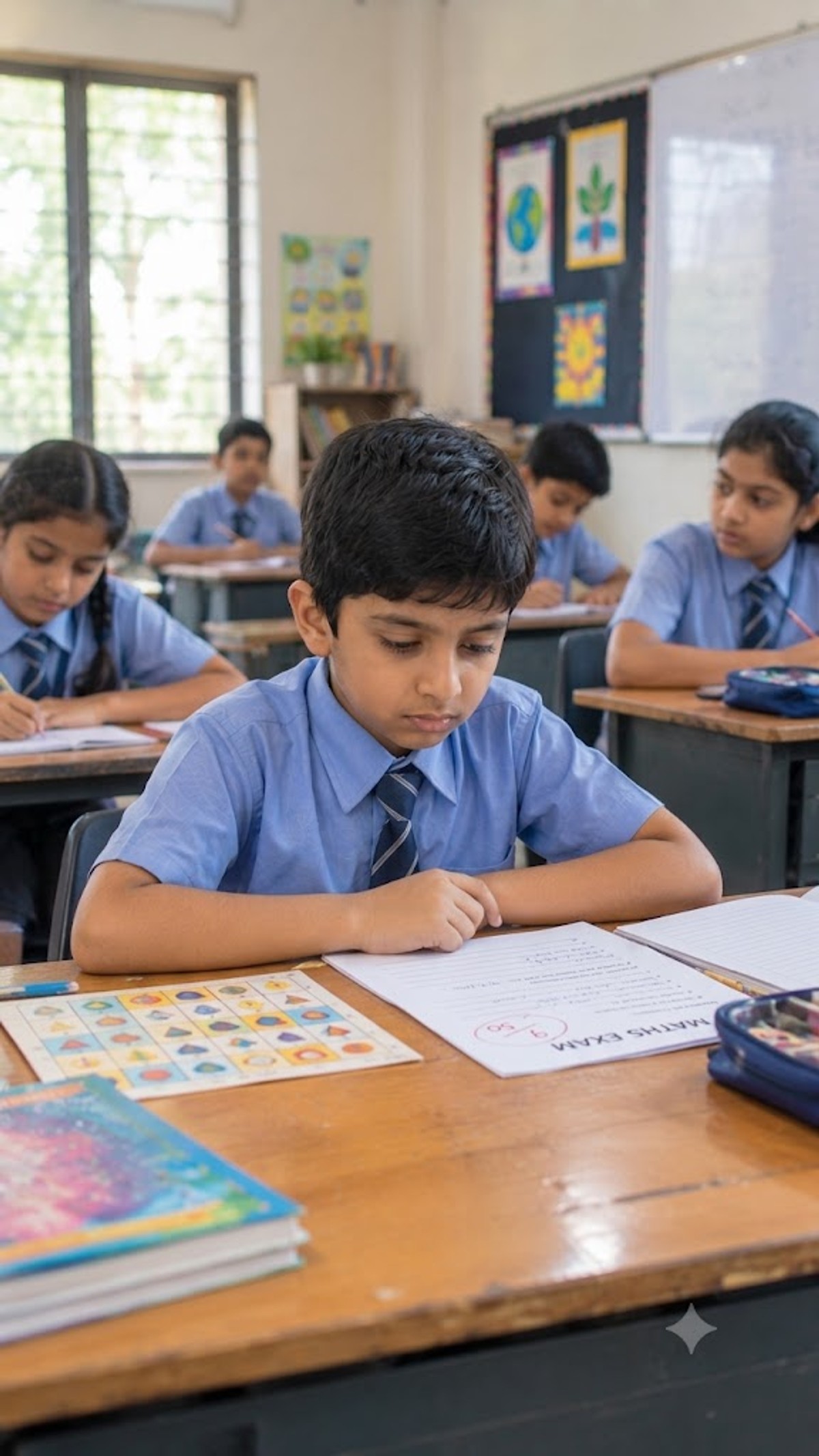
He can explain how a jet engine works, debate current events with adults, and solve puzzles years ahead of his grade level. He also can't finish a worksheet, forgets instructions the moment they're given, and comes home from school in tears more days than not. Teachers are confused. Parents are confused. “He's obviously smart,” everyone agrees — which is exactly why nobody thinks to look for a learning disability underneath the giftedness.
This combination has a name: twice-exceptional, often shortened to “2e.” It describes children who are both intellectually gifted and have a genuine learning disability, ADHD, autism, or another condition that affects how they learn — and it's one of the most under-identified profiles in education, precisely because the two traits mask each other.
Why 2e kids are so hard to spot
The National Association for Gifted Children describes three distinct ways twice-exceptional children fall through the cracks. First, children identified as gifted but without a recognised disability may simply go unnoticed for special education evaluation entirely — they're considered underachievers, often perceived as lazy or unmotivated, and may coast at grade level right up until the curriculum becomes significantly harder, typically in middle or high school, when their compensating strategies finally run out.
Second, children already identified with a disability but not recognised as gifted may be placed in programs that focus solely on their disability, without anyone assessing their intellectual abilities — leaving genuinely gifted children bored, unchallenged, and sometimes acting out specifically because the work in front of them is far below their capability.
Third — and perhaps most common — are children never formally identified as either gifted or disabled at all. Their giftedness masks the disability, their disability masks the giftedness, and the two effects average out to something that looks like ordinary, grade-level performance. These children are assumed to have average ability and are often never referred for any evaluation, because nothing about their report card looks alarming.
Research consistently frames this as a two-way masking problem: giftedness can hide a learning disability, and a learning disability can just as easily hide giftedness, and either direction leaves the child unrecognised for what they actually need.

What this actually looks like day to day
In the classroom, twice-exceptional children often perform both above and below average on different measures within the same subject — excelling at abstract discussion while struggling with the written mechanics of getting the same idea onto paper, for instance. This dynamic is exactly why identification is so difficult: a teacher watching the discussion sees a gifted student; a teacher grading the worksheet sees a struggling one, and neither observation alone tells the full story.
Left unaddressed, this contradiction takes a real emotional toll. Research on 2e children describes a common trajectory: when intellectual gifts and learning deficits are both left unrecognised, children can experience anxiety, chronic stress, and a persistent, painful sense of underachievement — not because they lack ability, but because nobody has yet named the specific mismatch between what they can do and what the standard classroom is asking them to do.

The stakes are significant. Research from the National Education Association's Twice-Exceptional Dilemma report notes that twice-exceptional students are at meaningfully higher risk of dropping out of school when their dual needs go unaddressed — they may underestimate their own capabilities so severely, after years of feeling like a contradiction nobody can explain, that they choose not to pursue further education at all, despite having the intellectual capacity to thrive in it.
This underachievement rarely announces itself as a crisis all at once. More often it looks like a slow drift: a child who loved school in the early years growing quietly disengaged by middle school, homework battles that seem disproportionate to the actual workload, or a bright child who describes themselves as “bad at school” despite being able to hold forth confidently on complex topics outside the classroom. Parents often describe a nagging sense that something doesn't add up long before any teacher raises a concern — that instinct is worth taking seriously.

How common is this?
Precise prevalence is genuinely difficult to establish, exactly because identification is so inconsistent — you can't easily count a population that systematically goes undiagnosed. Current estimates suggest that 2% to 5% of students may be twice-exceptional, though many experts believe the true number is meaningfully higher than what gets formally identified, given how easily both directions of masking allow a child to pass through school without either exceptionality being named.
What identification actually requires
The core problem with standard screening is that most identification processes are built to catch one exceptionality at a time, and each process can actively work against the other. Gifted identification programs typically look for strong, consistent performance across measures — exactly the profile a learning disability disrupts. Special education identification, meanwhile, often relies on comparing a child's actual performance against grade-level expectations — and a genuinely gifted child's above-average verbal reasoning or general knowledge can pull test averages up just enough that a specific processing weakness underneath doesn't trigger a support threshold.
This is why experts recommend twice-exceptional identification specifically look at the gap between different cognitive domains within the same child, rather than only comparing the child to grade-level or age norms. A child whose verbal reasoning scores in the top 5% but whose processing speed or working memory scores at or below average has a profile that neither a standard gifted screen nor a standard learning-disability screen, used alone, is designed to catch — but the internal gap itself is often the clearest signal something specific and addressable is going on.

Common combinations worth knowing
2e most often involves giftedness alongside ADHD, dyslexia, autism spectrum differences, or dysgraphia. Each combination has its own recognisable pattern: a gifted child with ADHD may show intense, sustained focus on self-chosen interests but be unable to sustain attention on assigned tasks — a pattern easily mistaken for defiance rather than a genuine attention profile. A gifted child with dyslexia may reason and comprehend at an advanced level when content is read aloud, while their own reading and writing lag years behind — creating exactly the kind of contradiction that gets written off as inconsistency or lack of effort rather than recognised as a specific, addressable learning difference.

A note for Indian classrooms
This masking pattern can be especially pronounced in exam-heavy, rote-memorisation-oriented educational systems, where a gifted child's strong verbal memory and general knowledge can carry them through years of assessments that reward recall over the specific processing skills their learning disability affects. This works right up until the curriculum shifts toward longer written responses, multi-step problem-solving, or timed high-stakes exams — often around the transition into middle or high school — at which point a child who has never needed support suddenly appears to be falling apart, when in fact the underlying difficulty was always there, simply never tested for.
Because giftedness itself is inconsistently identified in many Indian schools — with few formal gifted-education programs to begin with — twice-exceptional children here are arguably at even higher risk of complete non-identification than in systems with established gifted screening. A child who is quietly bright and quietly struggling in the same classroom may simply be read as an average student, with neither exceptionality ever surfacing on a report card built around a single averaged grade.

What we recommend
If your child shows a genuine, persistent contradiction — advanced reasoning or vocabulary alongside disproportionate struggle with reading, writing, organisation, or attention — it's worth requesting an evaluation that specifically screens for both giftedness and a learning difference together, rather than pursuing one assessment in isolation. Look for an assessor experienced with twice-exceptional profiles specifically, since a standard gifted screen or a standard learning-disability screen, used alone, is precisely what allows these children to be missed in the first place. Naming both sides of the profile — not just the struggle, and not just the strength — is usually what finally makes sense of a child everyone agrees is bright, but who keeps falling behind anyway.
Does your child feel like a walking contradiction — brilliant in conversation, struggling on paper?
We've built a simple worksheet to help you map the specific gap between your child's strengths and struggles across different areas — exactly the kind of profile a standard gifted or learning-disability screen, used alone, tends to miss.
📥 Free download: "Is My Bright Child Also Struggling? A Twice-Exceptional Profile Worksheet" — a free tool to map strengths and struggles across reasoning, reading, writing, attention, and organisation, plus questions to bring to a 2e-informed assessor.
References
1. Twice-Exceptional Identification and Identity Formation. University of Denver digital commons.
2. Twice Exceptional: Definition, Characteristics & Identification. Davidson Institute for Talent Development (2025), citing National Association for Gifted Children (NAGC).
3. What Does Twice Exceptional Mean? Identifying and Nurturing Gifted Children with ADHD. ADDitude Magazine (2025).
4. The Twice-Exceptional Dilemma. National Education Association, in partnership with the National Association for Gifted Children.
5. Gifted and Dyslexic: Identifying and Instructing the Twice Exceptional Student Fact Sheet. International Dyslexia Association.
6. The Gifted Child with Learning Disabilities: Twice Exceptional Students. Foundations Cognitive (2025).