

Google Said It's Normal” — What Parents and Professionals Should Know Before Trusting AI With a Child's Diagnosis
Manasi Valluri
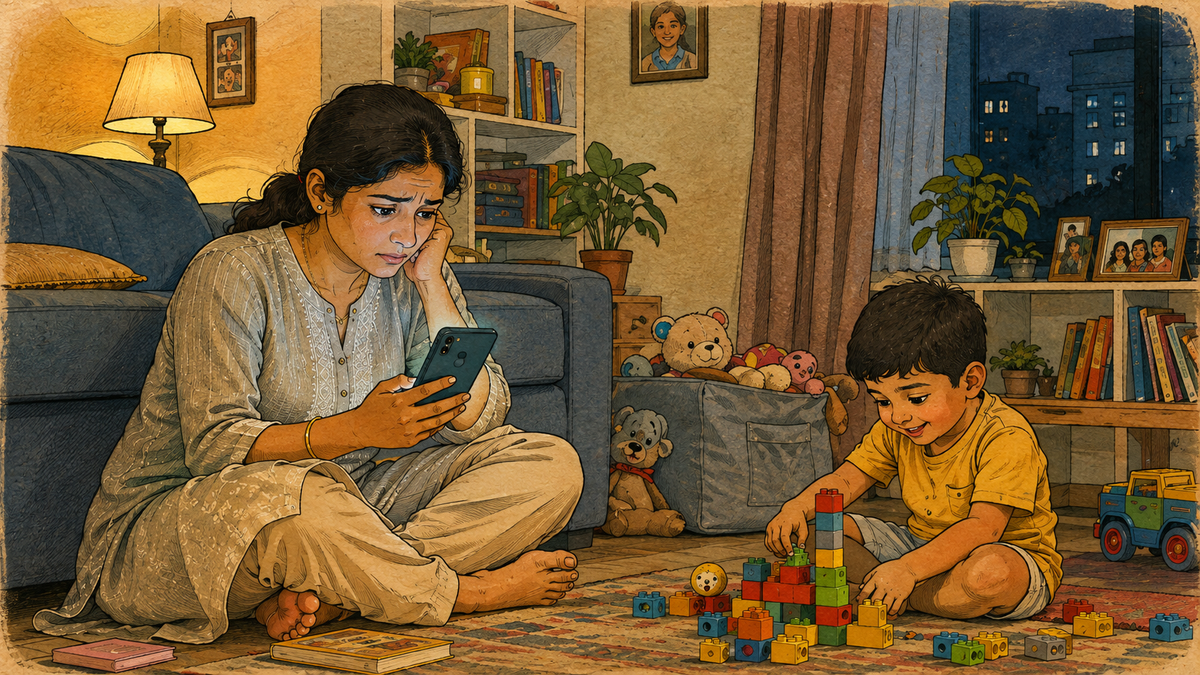
A grandmother notices something in a two-year-old's play. A teacher mentions a child seems “off” in a way she can't quite name. A parent lies awake wondering whether the tantrums, the silence, the toe-walking, or the inability to sit still for five minutes mean something. Increasingly, the first place these worries land isn't a paediatrician's clinic — it's a chatbot.
Across India, parents are increasingly turning to AI tools as a first stop for exactly this kind of worry. One widely reported case involved a mother whose in-laws raised concerns that her toddler's high energy looked like autism or ADHD. She asked an AI chatbot, which told her the child's development was within the normal range. She held onto that reassurance for a full year before a play therapist finally assessed the child in person — and confirmed the chatbot had, in that instance, been right. But the story is really about the year in between: twelve months where a family's only “assessment” was an unverified, unlicensed, non-clinical tool, and where a wrong answer could just as easily have delayed help a child actually needed.
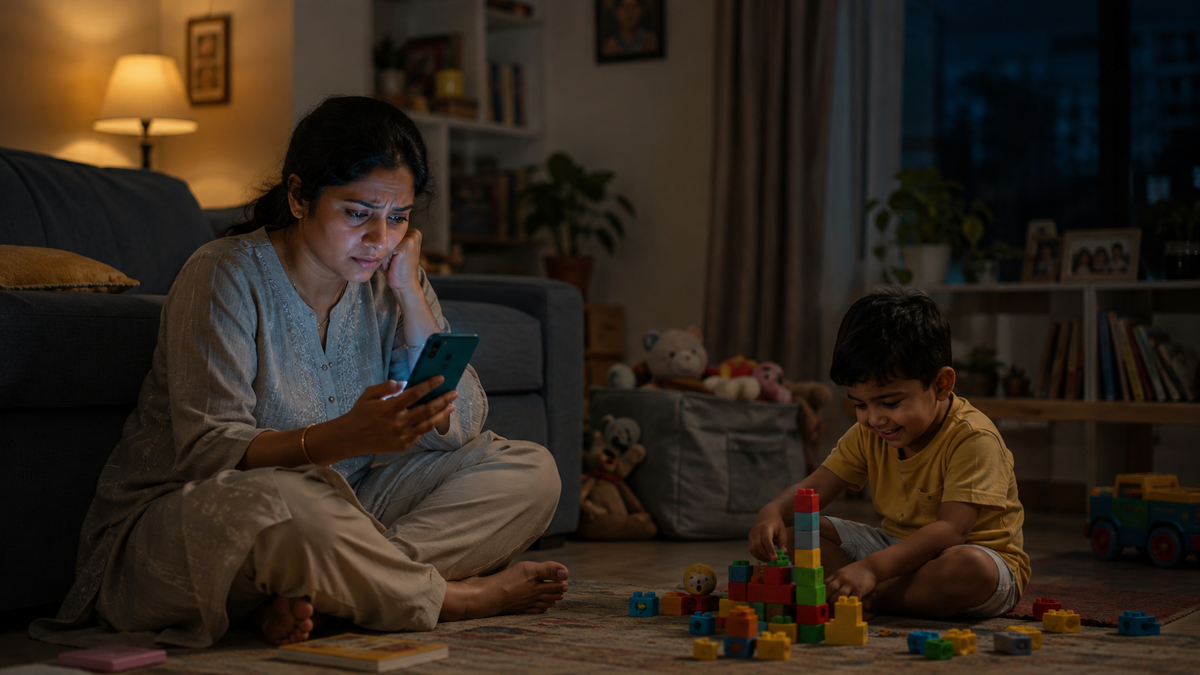
This isn't an isolated habit. Researchers studying digital parenting in India describe a broader pattern: parents turning to AI chatbots for consolidated answers to avoid wading through endless, contradictory information online, and using AI as a buffer against the anxiety of extended family opinions and information overload. It's an understandable response to a real problem — waitlists for developmental paediatricians and clinical psychologists in India can run months, and a chatbot answers at 2 a.m. But understandable doesn't always mean accurate, and the clinical evidence on what AI can and cannot responsibly do here is worth spelling out plainly, for parents and for the professionals who see these families after the chatbot chapter is already underway.
What AI genuinely does well
It's worth being fair to the tool before critiquing it. There is real, published research on AI supporting — not replacing — care for neurodivergent children. A feasibility study with 26 parent–child dyads found that when parents used ChatGPT to generate physical activity suggestions for children with autism spectrum disorder, families reported the activities were engaging and useful, and measured physical activity levels rose significantly in the intervention group compared to controls. Parent-facing platforms have also used AI-driven chat support to help caregivers navigate resources, understand daily-living skill-building activities, and access adaptive learning modules for children already diagnosed with ASD.
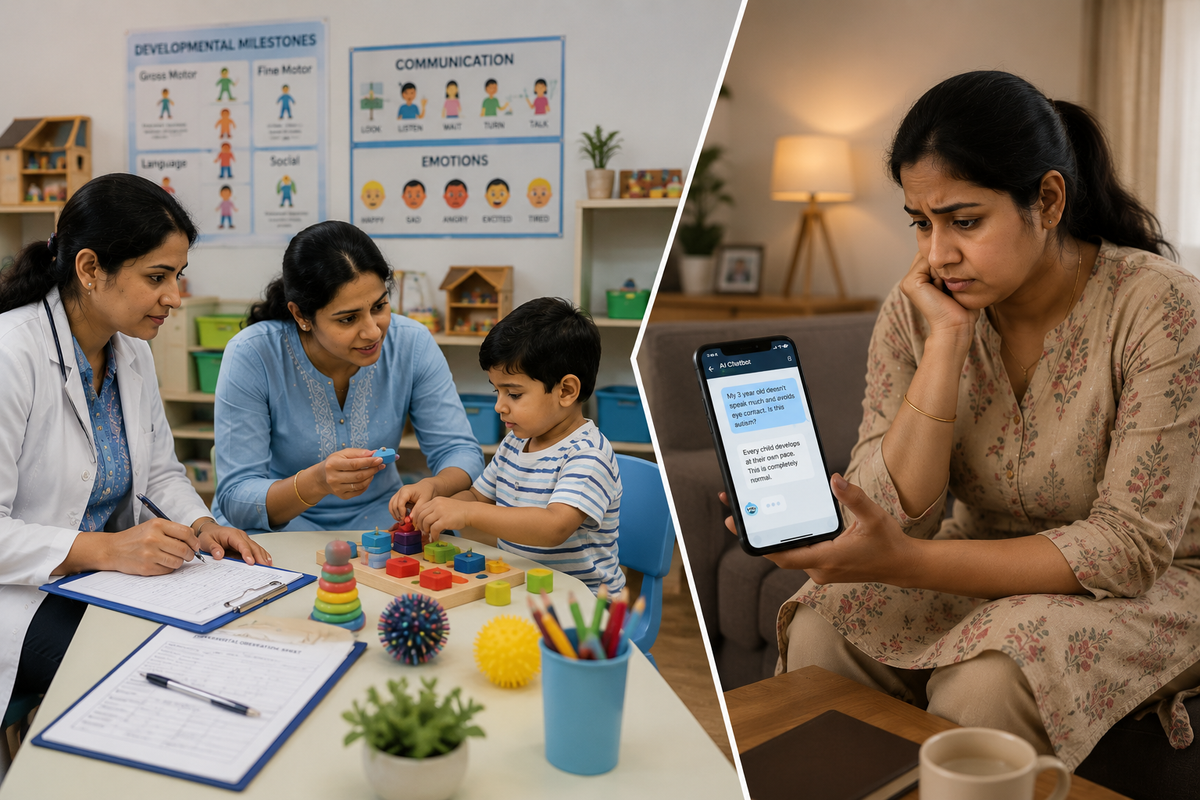
So the evidence supports AI as a genuinely useful assistant for things like: generating personalised practice materials, suggesting structured routines and activities, helping a parent phrase a difficult conversation, or organising the mountain of information a newly diagnosed family suddenly has to absorb. None of that is in question.
Where the evidence says AI falls short — and why it matters
The gap opens at the word “diagnosis.” Even purpose-built AI models, trained specifically to detect autism-related language in parents' own descriptions of their children, aren't reliable enough to act on alone. In one study, a transformer-based model fine-tuned specifically to classify parent narratives as autism-related or not achieved roughly 83% accuracy — meaningfully better than chance, but still wrong in something like one out of every six cases. That's a purpose-built research model. A general-purpose consumer chatbot, answering an off-the-cuff question with no training data specific to that child, carries no such validation at all.
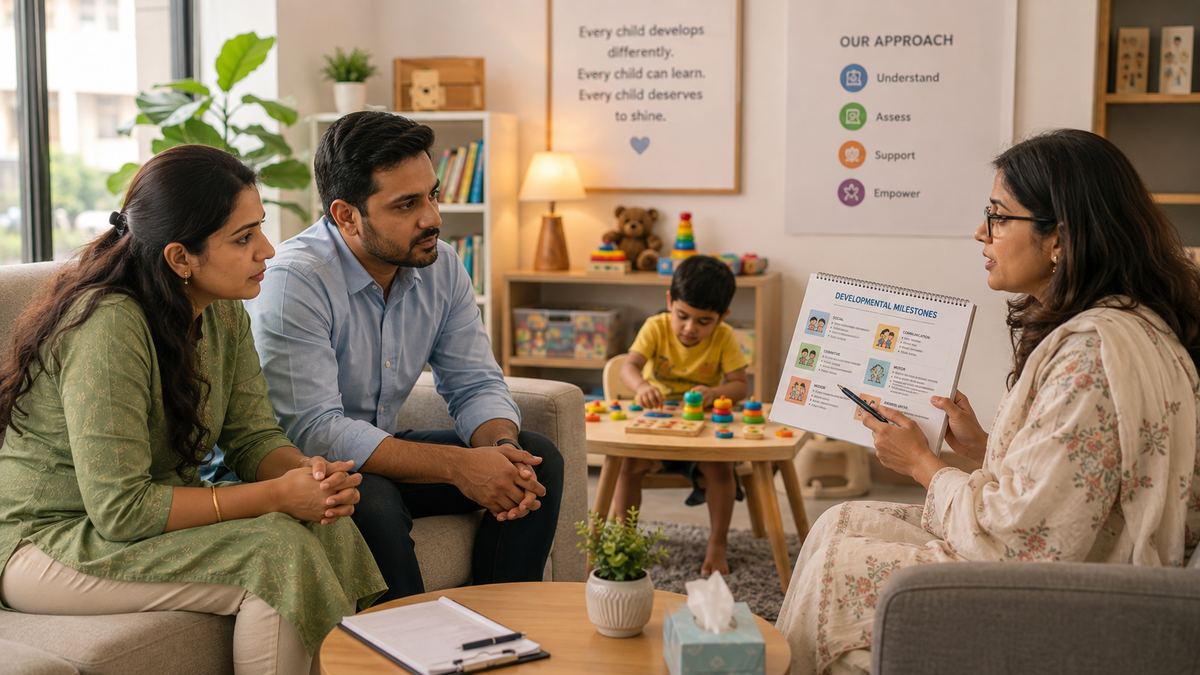
Even the screening instruments that clinicians actually rely on — validated, standardized tools like the M-CHAT-R — aren't perfect. Research measuring how well these formal tools catch children truly at risk for autism found they identified anywhere from 58% to 88% of at-risk children, depending on the measure and how it was scored. If a validated clinical screening tool, designed and tested for exactly this purpose, still misses a meaningful share of children who need help, a conversational answer from a general AI chatbot — built for open-ended conversation, not diagnostic accuracy — should be treated with real caution.
This isn't a uniquely Indian or hypothetical concern. In the UK, the NHS-linked Anna Freud Centre has developed what may be the most clinically serious attempt yet at an AI tool in this space: a chatbot built specifically to help triage the huge backlog of autism and ADHD referrals (over 172,000 open referrals in England as of December 2023, with some families waiting more than three years). Even so, its own developers are explicit that its job is to “screen, support, signpost, and triage” — not to diagnose. If a clinically designed, institutionally backed tool built by specialists for exactly this problem still positions itself as a signposting layer rather than a diagnostic one, a general consumer chatbot answering a worried parent's late-night question is not positioned to do more than that either.
There's a related risk in high-stakes moments beyond developmental screening. A 2025 review of AI chatbots in pediatric emergency contexts found that while these tools can generate a wide range of plausible differential diagnoses, there has been limited evaluation of how well they perform against established pediatric protocols — a caution worth extending to any moment where a parent might substitute a chatbot's confidence for a clinician's judgment.
Why the story doesn't end at “the chatbot was wrong”
It's tempting to focus only on the risk of false reassurance — a chatbot telling a parent everything is fine when it isn't. But the reverse also happens: general-purpose tools trained on broad internet text can just as easily overcall ordinary variation in development as a red flag, sending an anxious parent into a spiral, or toward interventions the child doesn't need. Either error costs a family something real — either delayed support or unnecessary worry — and neither error is one a chatbot is currently validated to avoid reliably.
For clinical professionals: meeting families where the chatbot left them
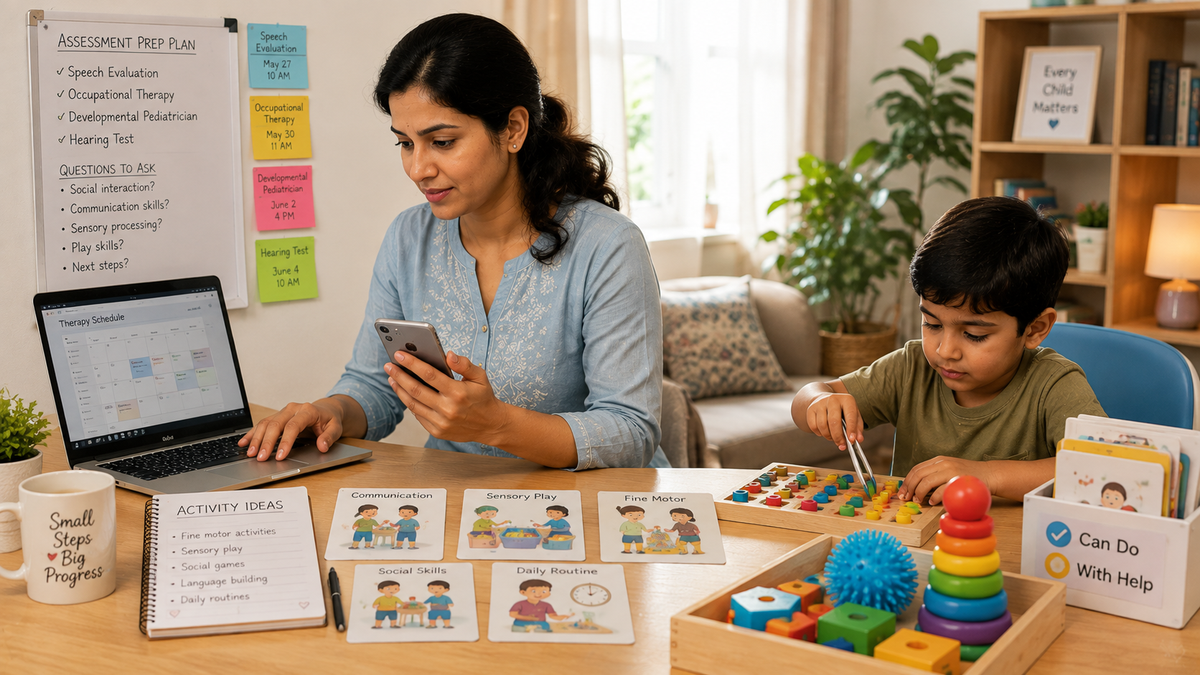
By the time many families reach a speech-language pathologist, occupational therapist, or developmental paediatrician, they've often already run their concern past an AI tool — sometimes for months. This has practical implications for intake and reporting:
- Ask directly, without judgment, whether the family has used an AI tool for guidance on this concern — it opens a more honest conversation than assuming they haven't.
- Expect some families to arrive with a chatbot-generated framework or vocabulary for their child's behaviour — use it as a starting point for history-taking, not as pre-existing data.
- In written reports and parent-facing explanations, it can help to explicitly name why a structured, validated tool (M-CHAT-R, ADOS-2, standardized OT assessments) carries a different weight than a chatbot's answer — parents are more likely to trust the clinical process when they understand what it adds that a quick AI answer cannot.
- Where a family has delayed evaluation because of AI reassurance, frame this as a common and understandable pattern, not a parenting failure — shame closes conversations; context keeps families engaged.
What we recommend to parents
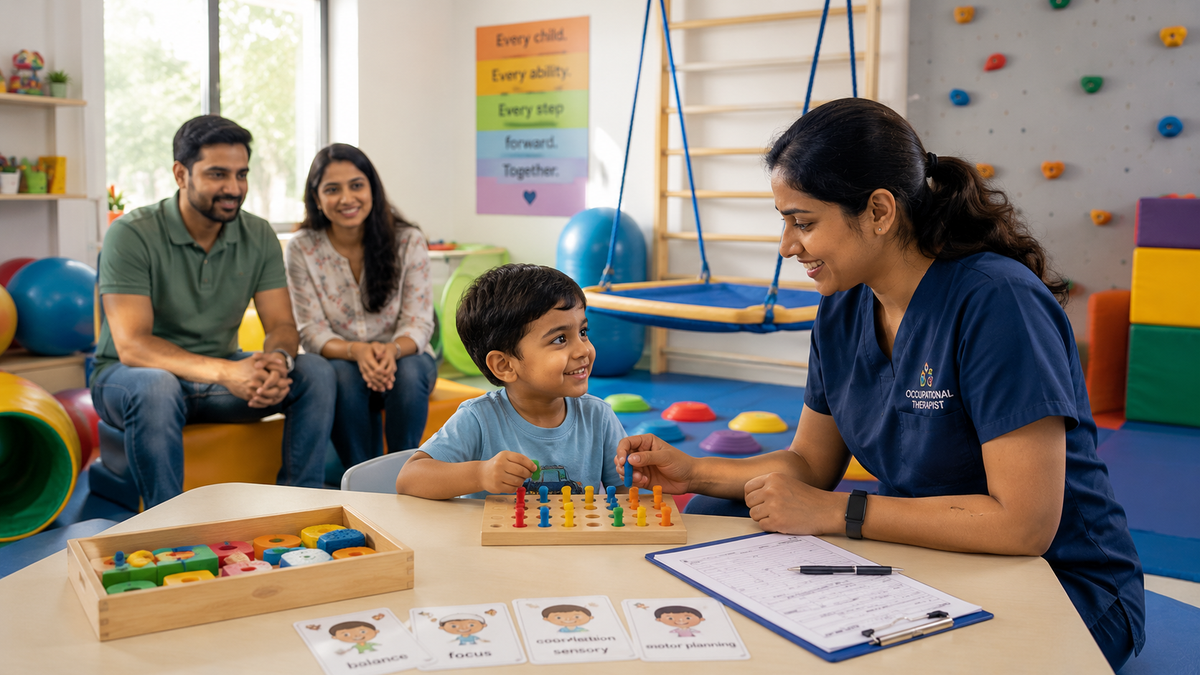
Use AI tools for what the research supports: generating activity ideas, organizing information, drafting questions to bring to an appointment, or managing the logistics of a diagnosis you already have. Don't use them as a substitute for a validated screening tool or a clinical evaluation — not because the technology is without value, but because even the best-performing AI models built specifically for this task, and even the validated instruments clinicians use, still get it wrong often enough that a single answer shouldn't be the end of the process. If a teacher, grandparent, paediatrician, or your own gut has flagged a concern, that concern deserves an in-person evaluation — regardless of what any app says first.
Not sure whether what you're seeing needs a chatbot or a clinician?
We put together a short, practical guide to help you tell the difference — and to make the most of whichever conversation you're about to have, whether that's with an AI tool tonight or a specialist next week.
📥 Free download: "AI vs. Professional Evaluation: A Parent’s Decision Checklist" — a one-page guide covering what’s safe to ask AI, the red-flag signs that warrant an in-person evaluation regardless of any app’s answer, and a ready-to-use question list for your child’s first specialist appointment.
References
1. Michelini, G. et al. (2026). The neurodevelopmental spectrum: phenotypic architecture, etiology, predictive utility, and specificity across development. Molecular Psychiatry. (context on validated developmental assessment)
2. Mukherjee et al. (2023), as reviewed in: Implementation of generative AI for the assessment and treatment of autism spectrum disorders: a scoping review. Frontiers in Psychiatry (2025).
3. Kanne, S. et al. Risk Assessment for Parents Who Suspect Their Child Has Autism Spectrum Disorder: Machine Learning Approach. PMC5941093.
4. UCLPartners (2025). AI chatbot could revolutionise autism and ADHD diagnosis pathways — Assembly tool, Anna Freud Centre and NHS trusts.
5. Artificial Intelligence Chatbots in Pediatric Emergencies: A Reliable Lifeline or a Risk? PMC12401188 (2025).
6. ChatGPT-Delivered Physical Activity Intervention for Children With Autism Spectrum Disorder: Pre-Post Feasibility Study. PMC12175874.
7. UNESCO Courier (2026). Parenting by prompt in India.
8. ParentCircle. How ChatGPT, An AI Assistant Can Help In Raising Children With Autism and ADHD